© 2026 MARCO ARRIGONI
All rights reserved
Communication designer based in Milan.
I work across editorial design, visual identities and interaction design, developing concept-driven projects rooted in research and observation.
My practice focuses on translating complex cultural and social dynamics into clear and structured visual systems and narratives.
I’m particularly interested in the relationship between physical and digital experiences, using design as a tool to build layered and meaningful stories.
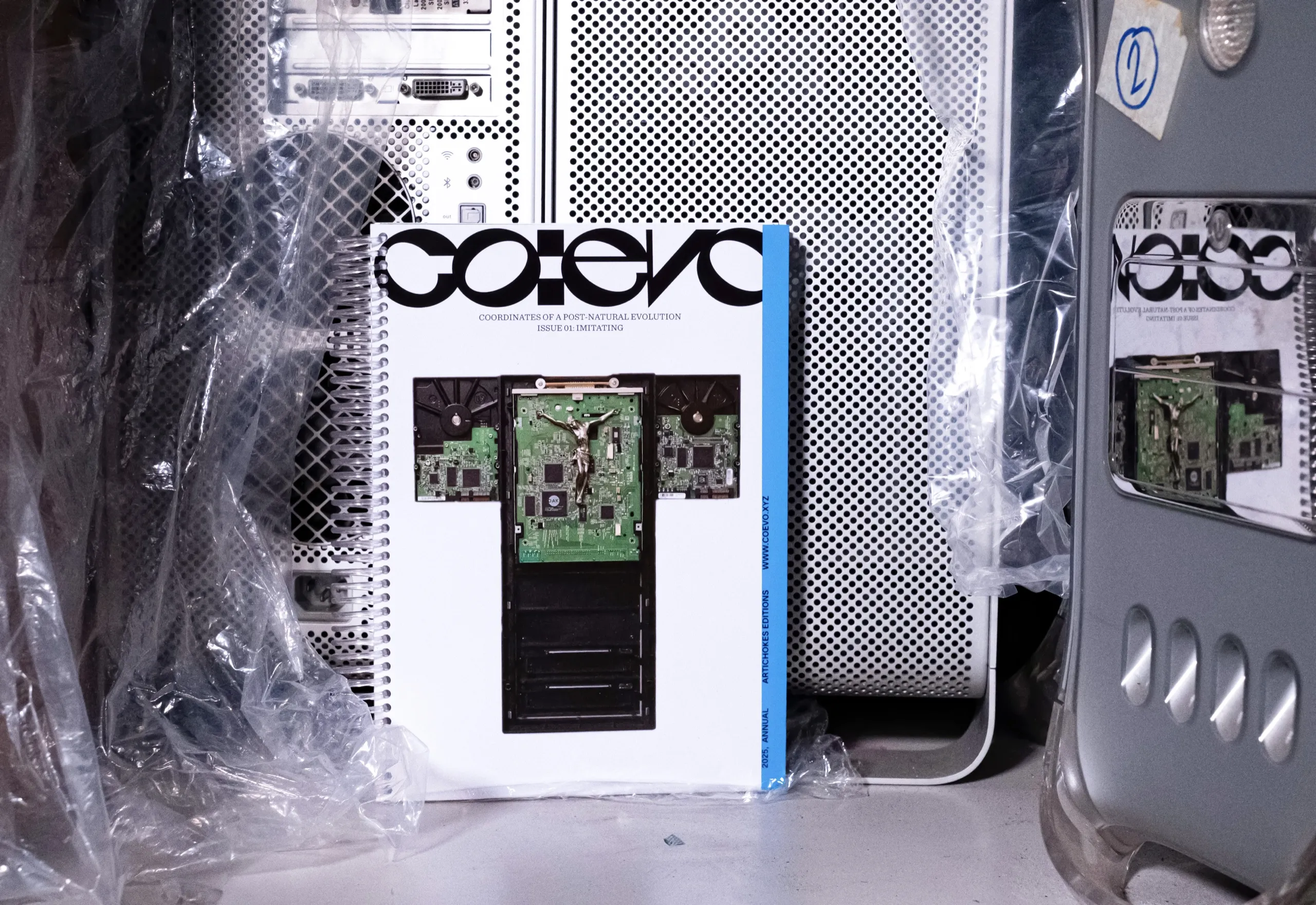
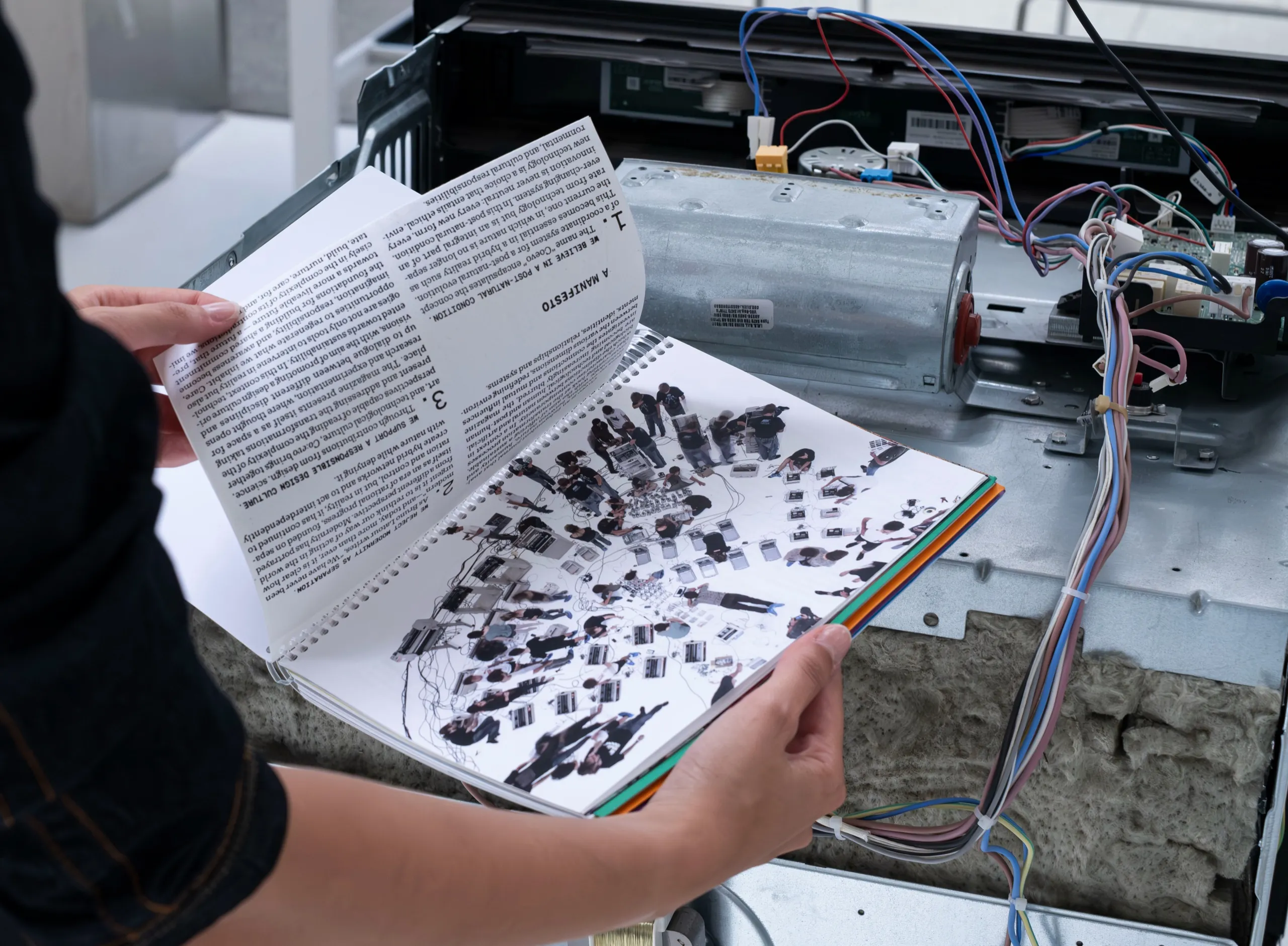
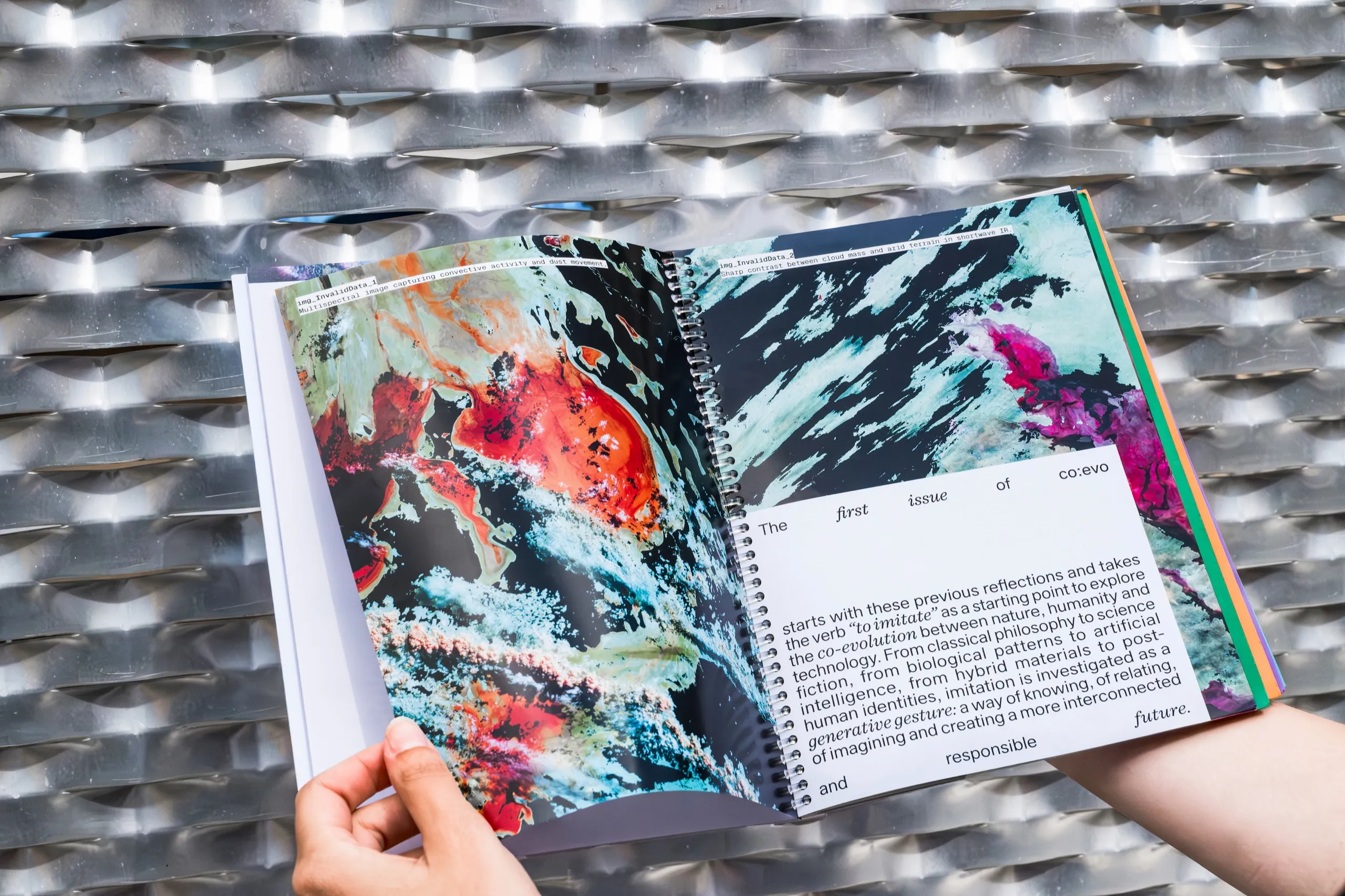
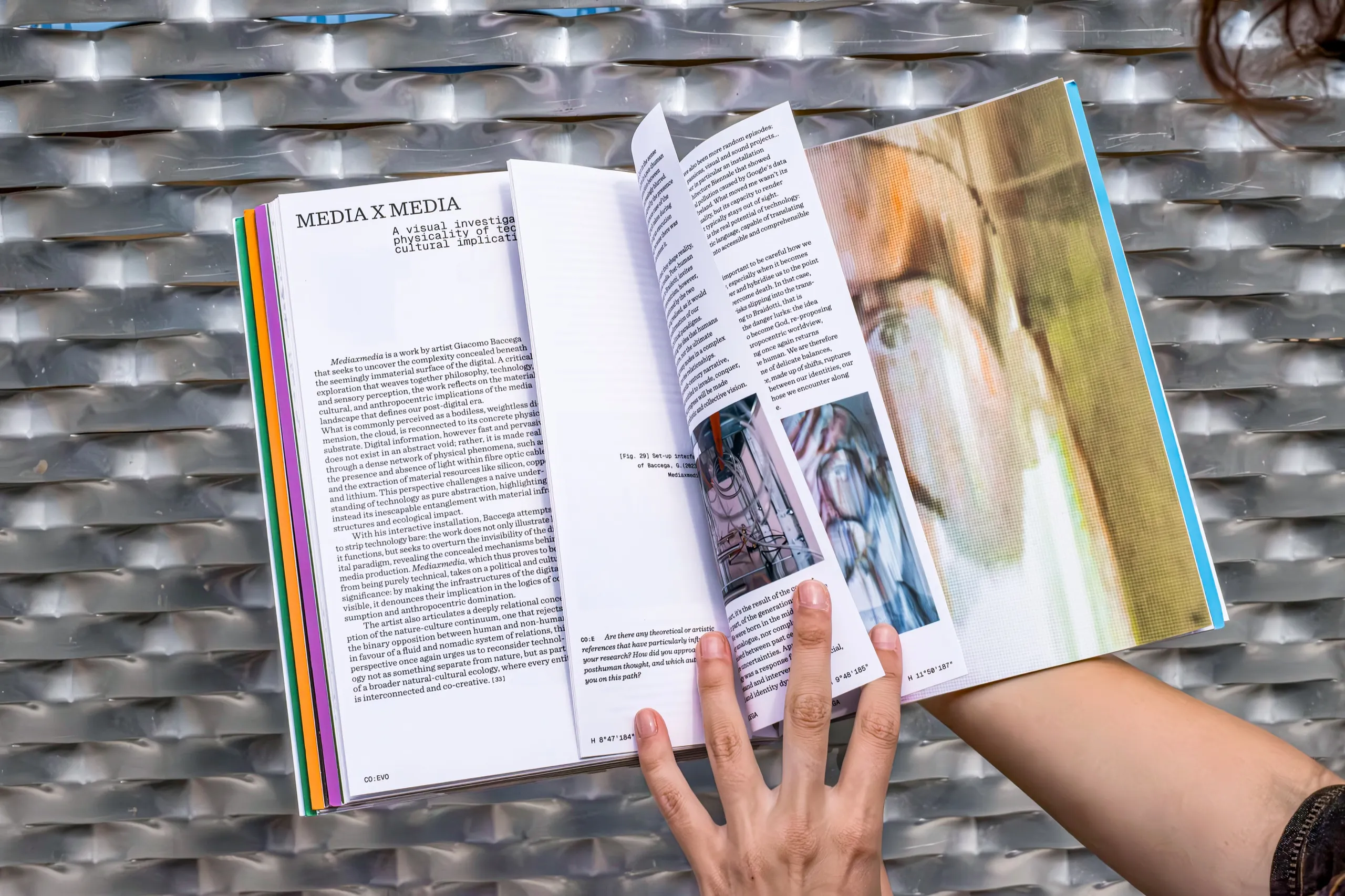
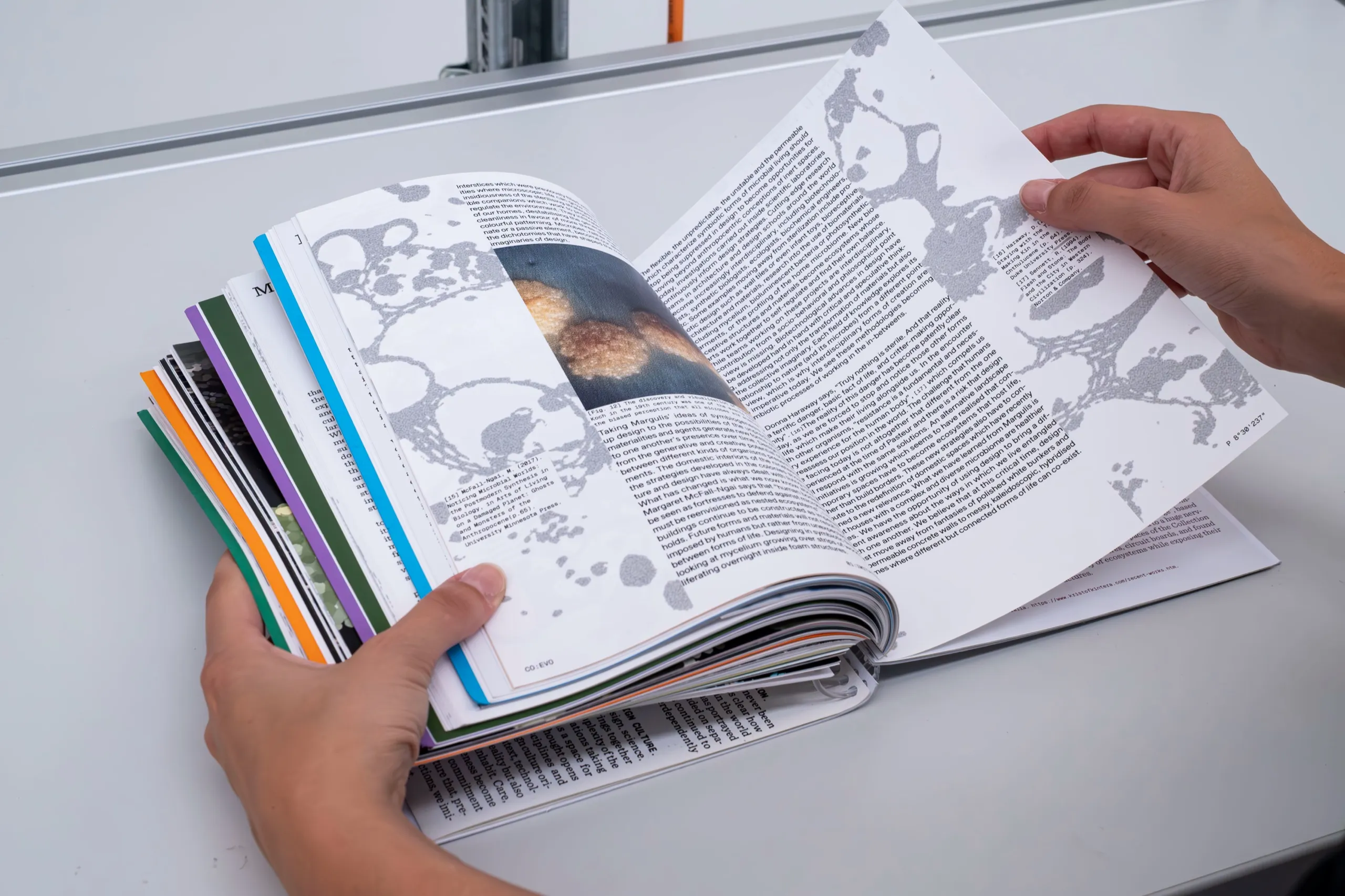
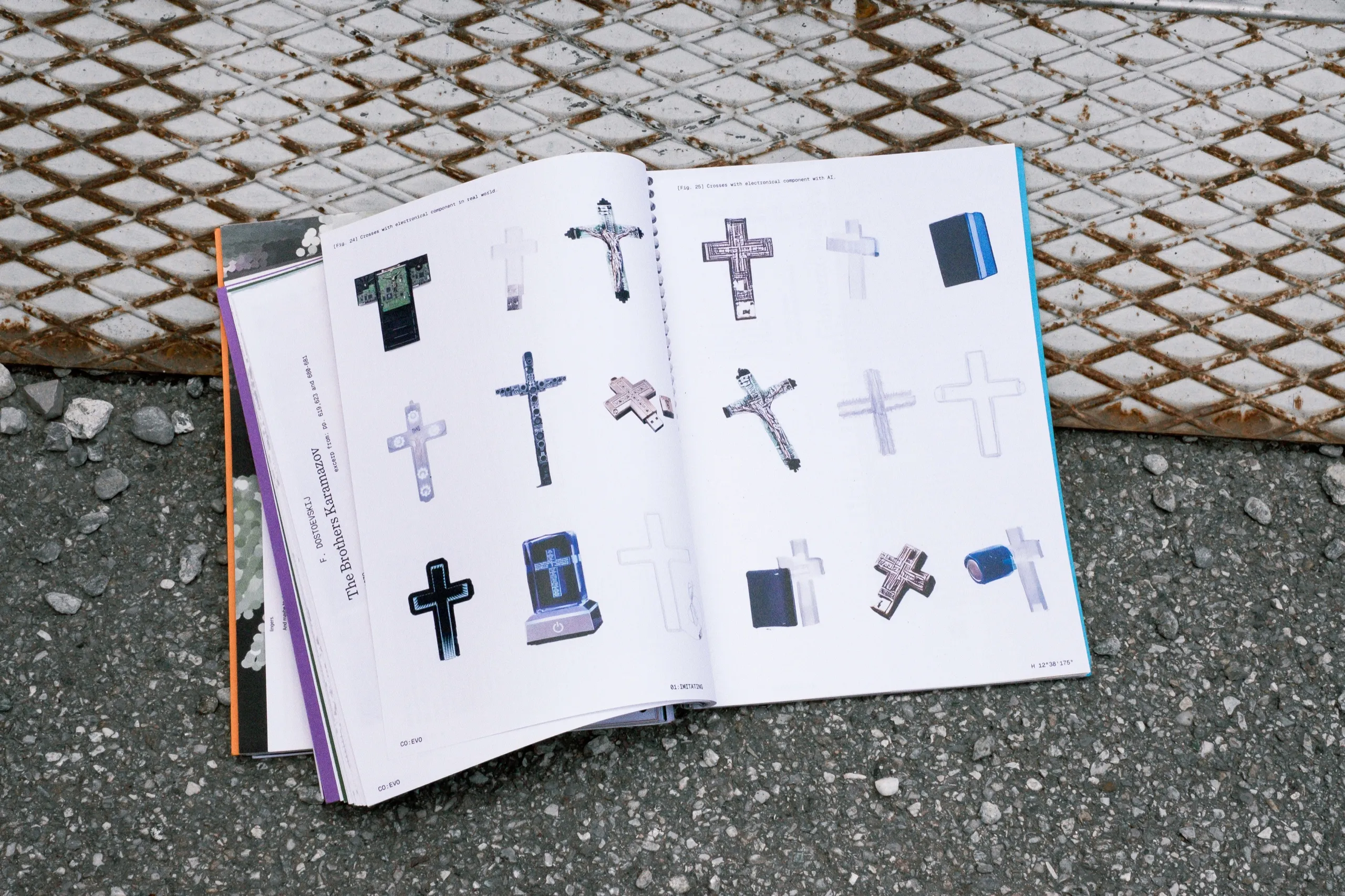
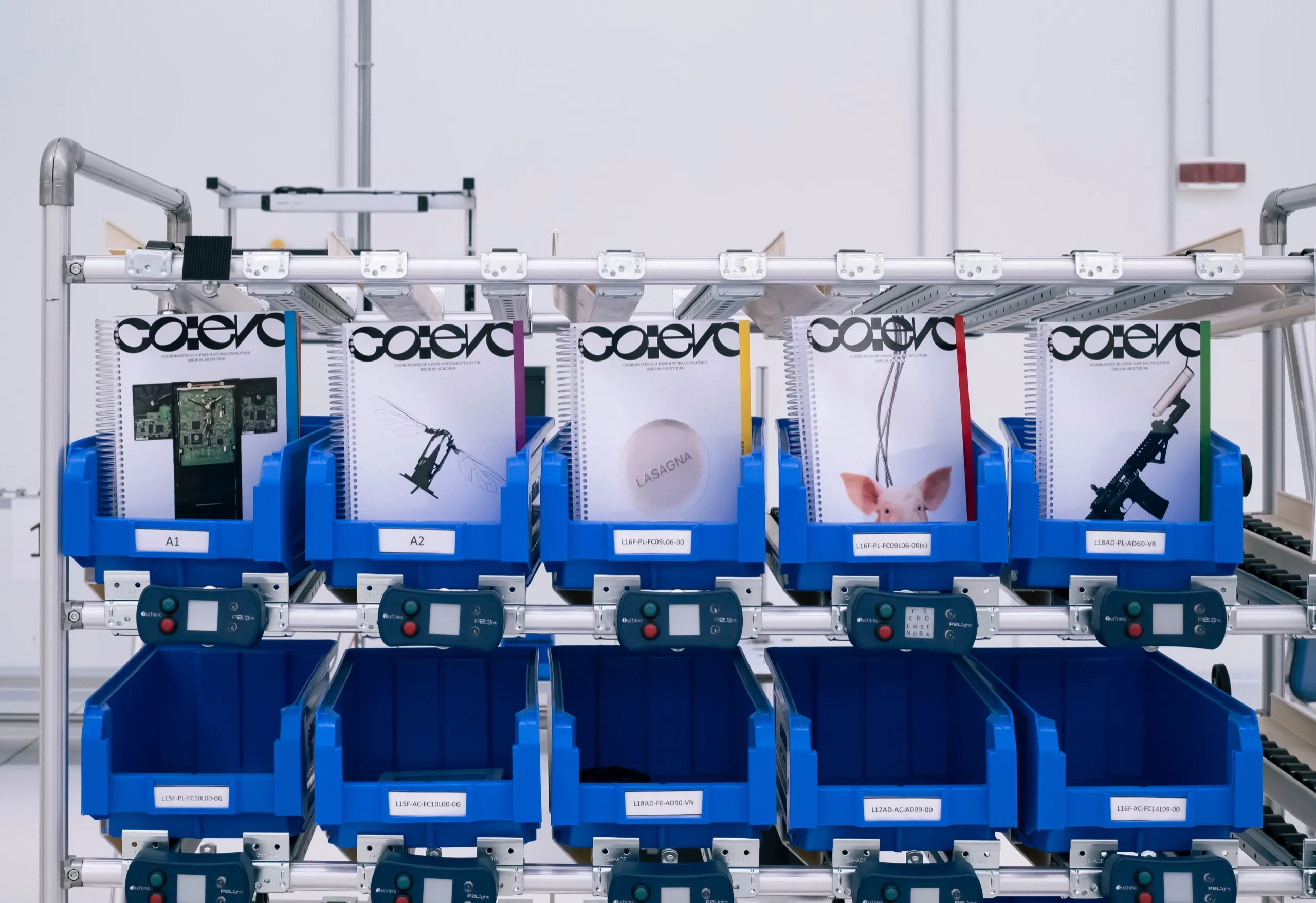
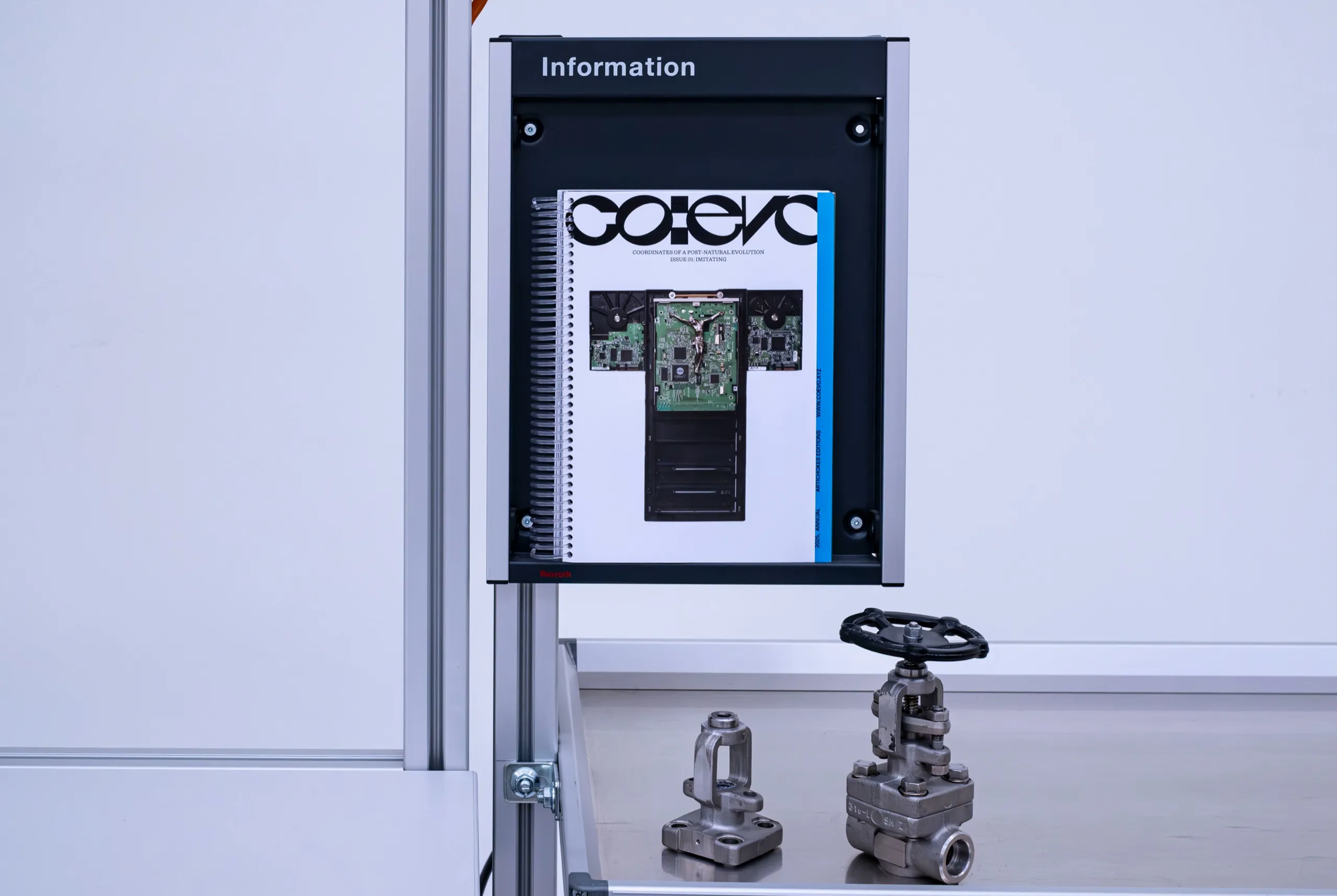
Coevo is a magazine on the co-evolution of nature, humanity and technology, which extends into a performance as its transmedial counterpart. Its name comes from the Latin coaevus, “belonging to the same era,” reinterpreted as a complex, interconnected simultaneity: a condition in which the boundaries between natural and artificial, biological and technological, human and post-human are increasingly blurred. The magazine combines visual essays, theoretical reflections and experimental narratives through a hybrid visual language and a fluid editorial structure. The performative video translates its questions into the body: asked whether what they see is natural or unnatural, participants answer by taking a position in space, revealing the ambiguity of the divide. The aim is to offer a sustainable and cross-disciplinary perspective on the transformative processes that shape contemporary times.
University project
Collaborators
Andrea Capozza, Giorgia Casadei, Eva Cupellini, Elena Hu, Serena Troisi
Scroll down to see the project
Gruppo FIRM.GS is a web archive developed for FIRM, collecting more than 5,000 images shared over the years in its Telegram group. The group was born as a place where friends sent each other things with an ironic, comedic edge. Over time it became something more: a container of vernacular graphics, the everyday visuals that make you laugh yet spread everywhere across public space. Without ever stopping being a place for memes and strange finds, it turned into an informal study of this kind of visual culture. The archive gathers all of this content in one place and makes it easy to navigate, so that anyone can browse it for a laugh or use it as a source of visual research.
Project in collaboration with FIRM
Collaborators
Visit the website
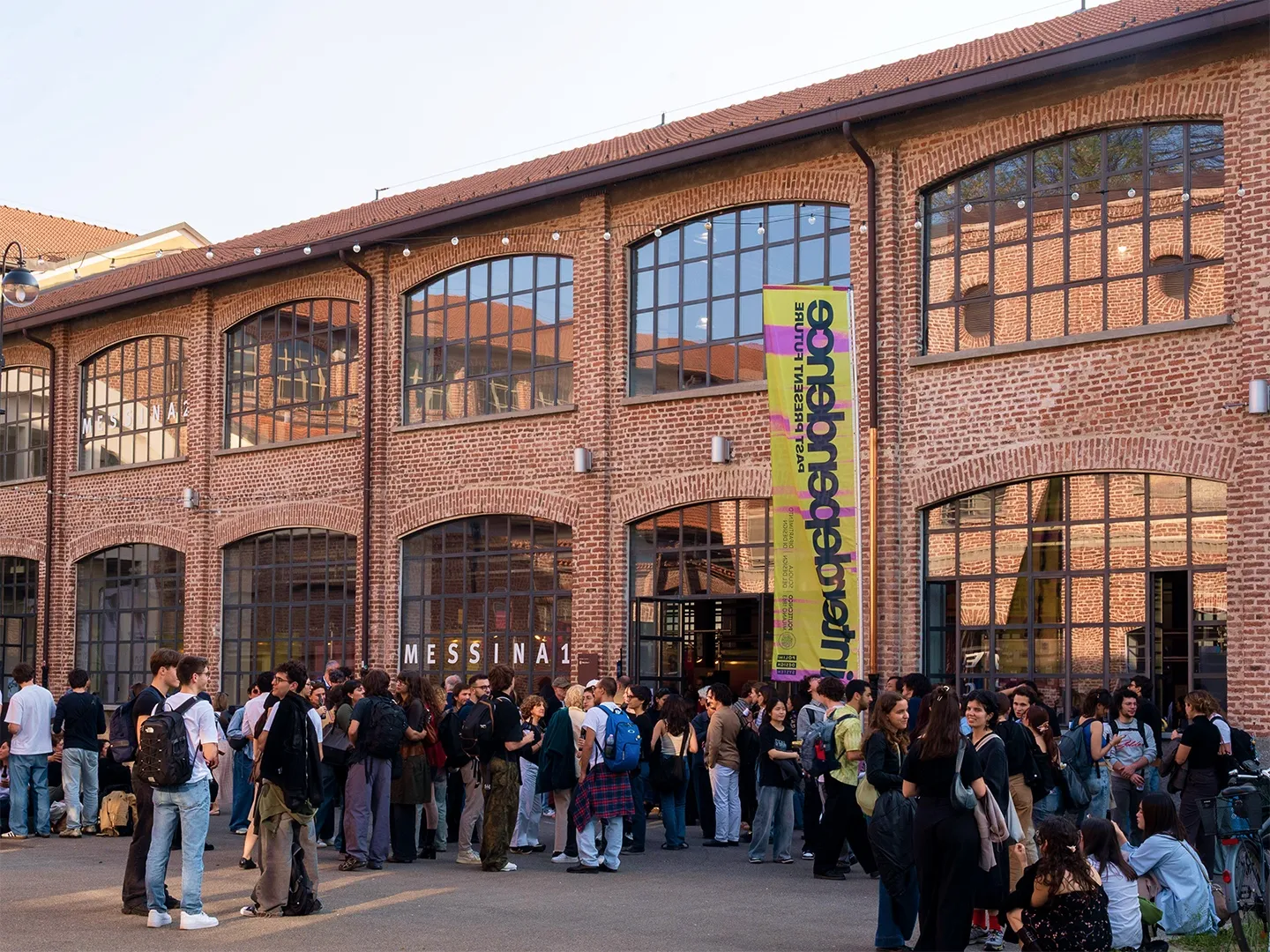
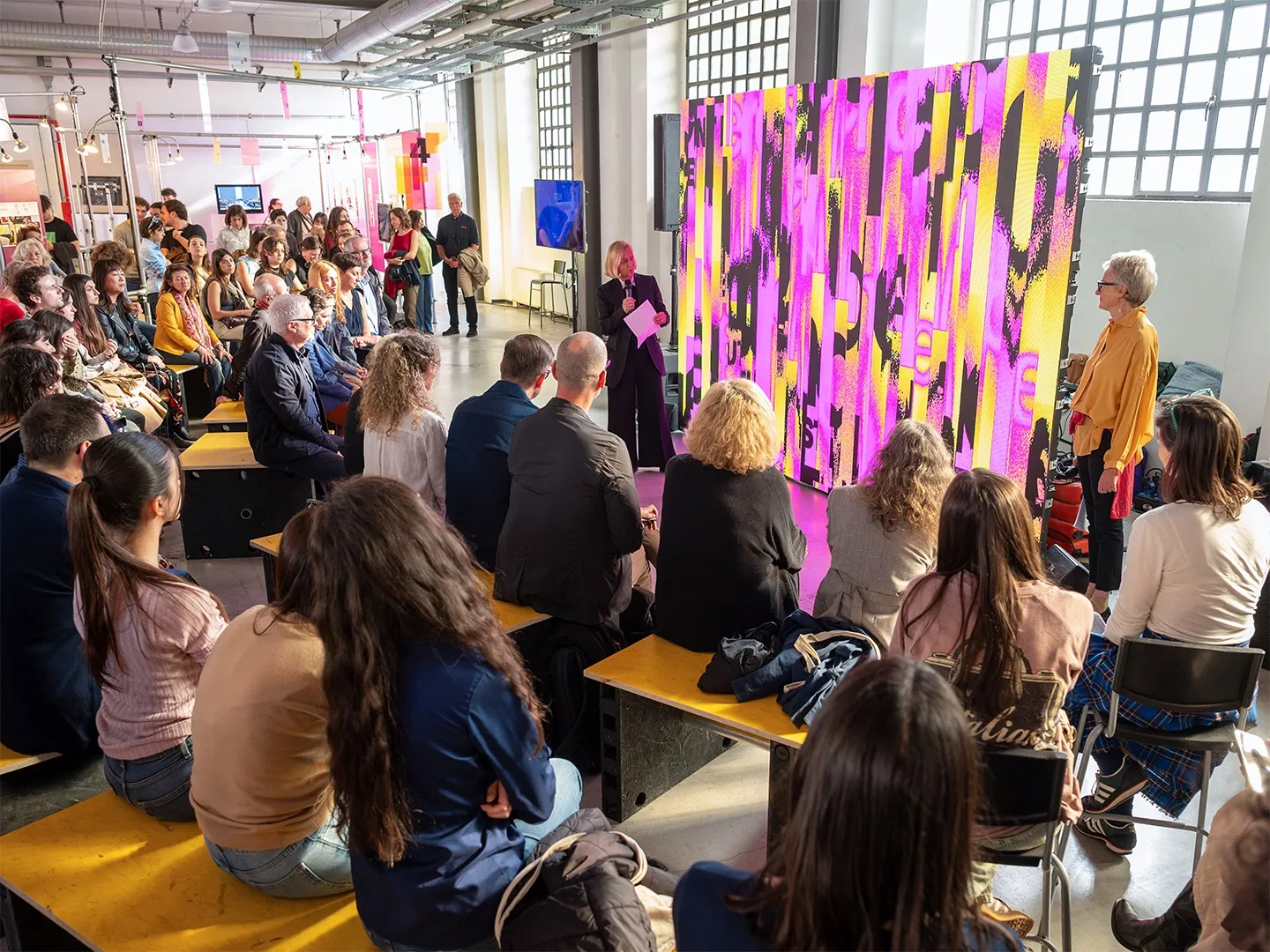
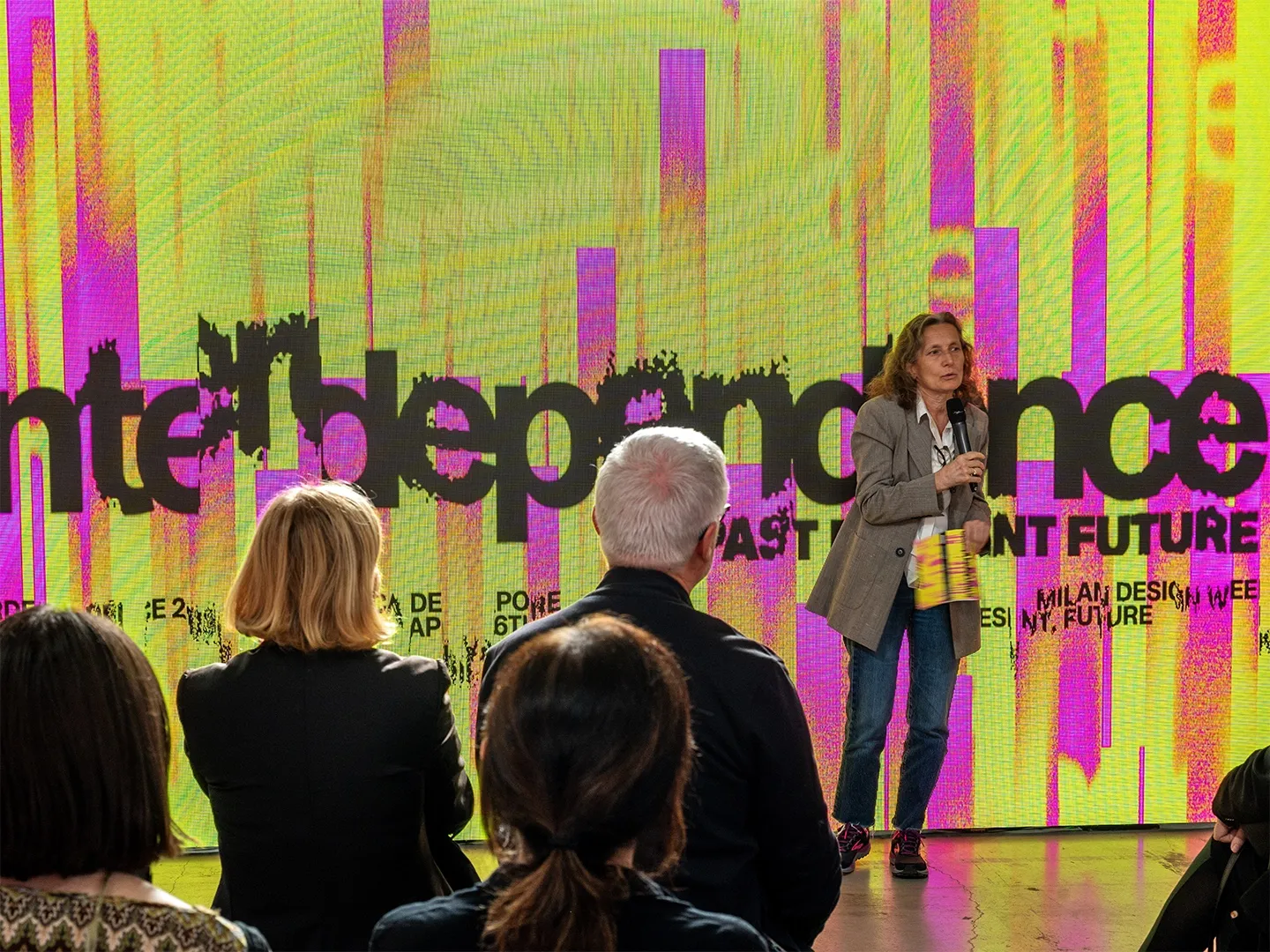
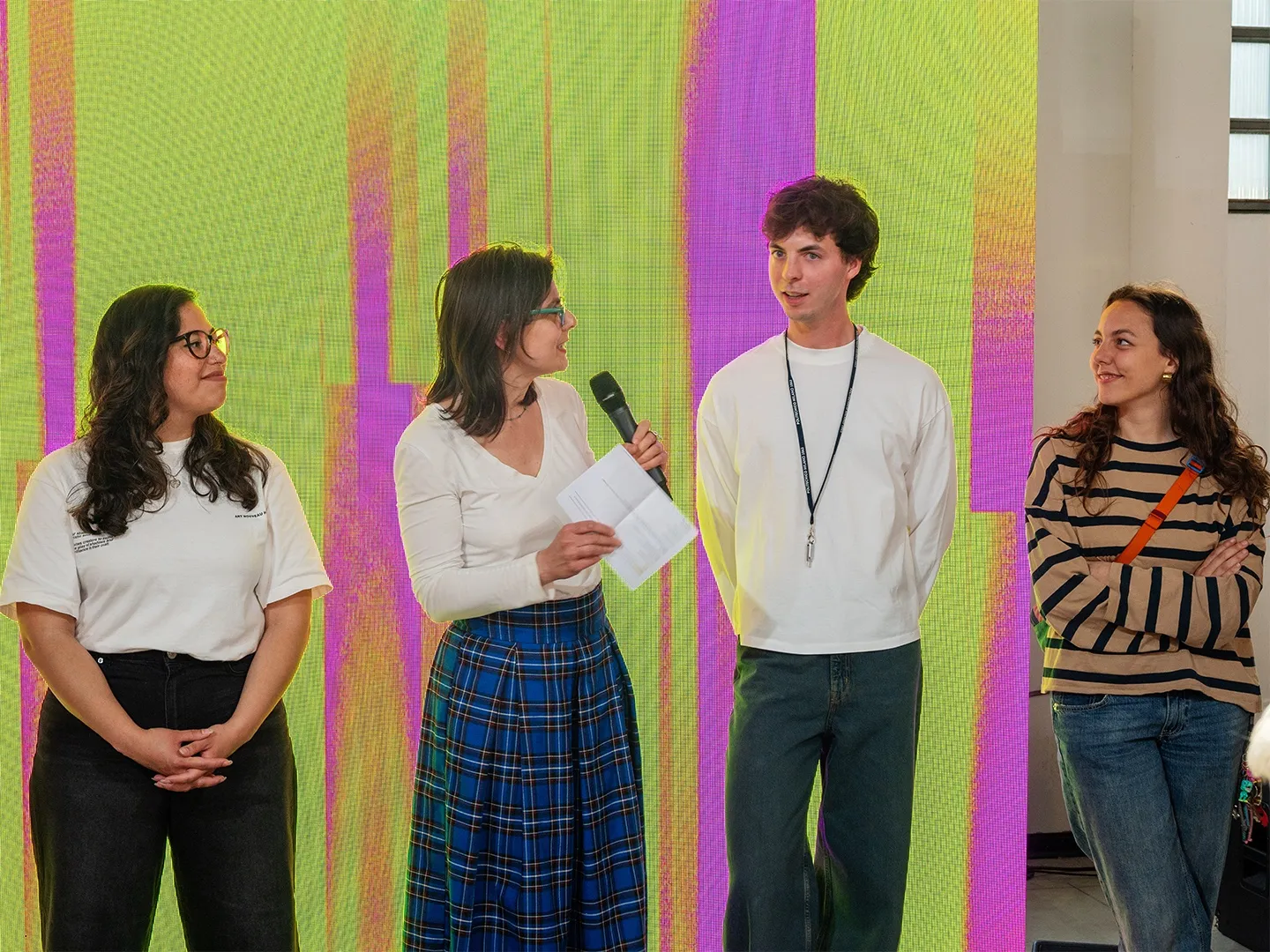
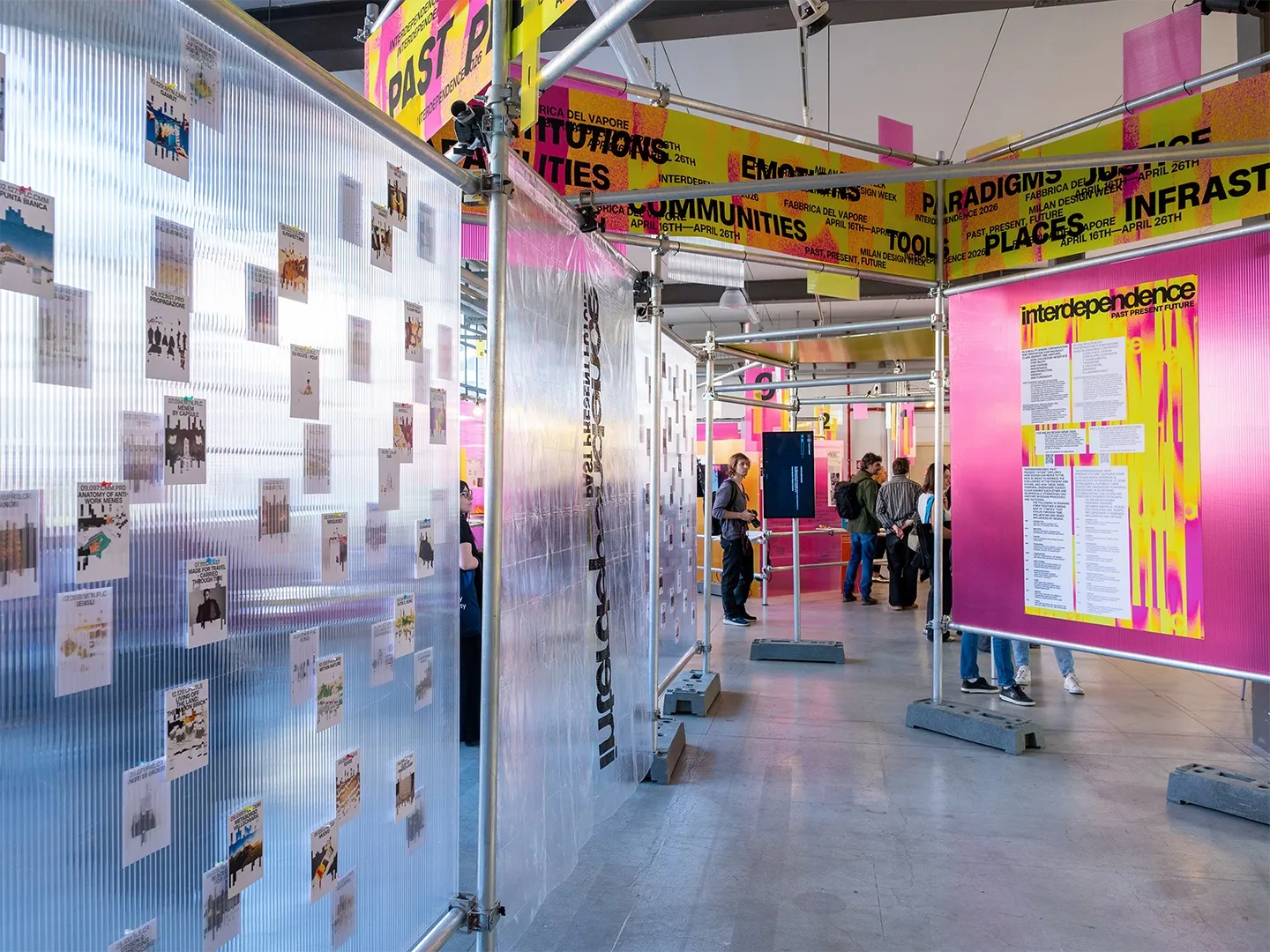
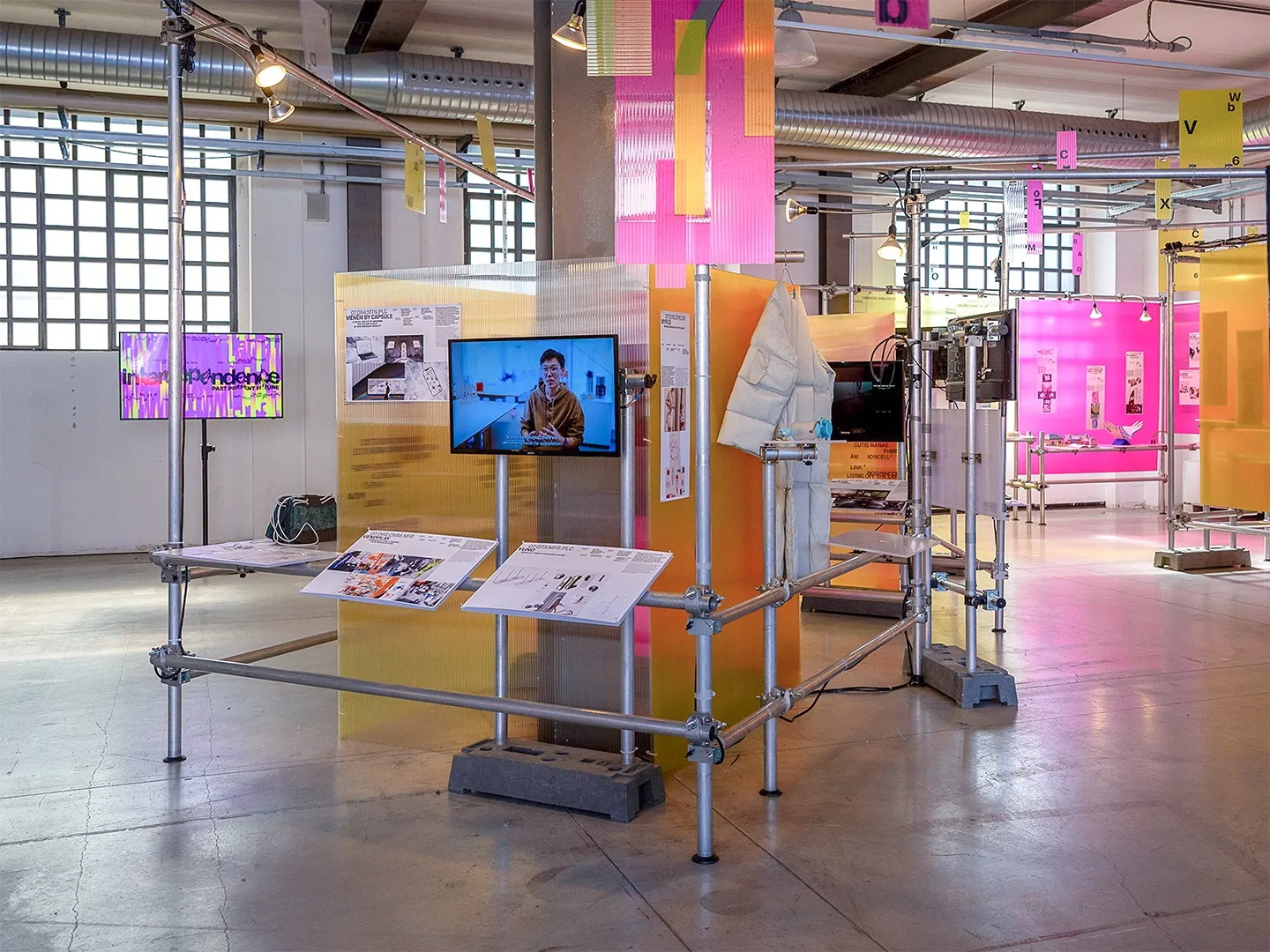
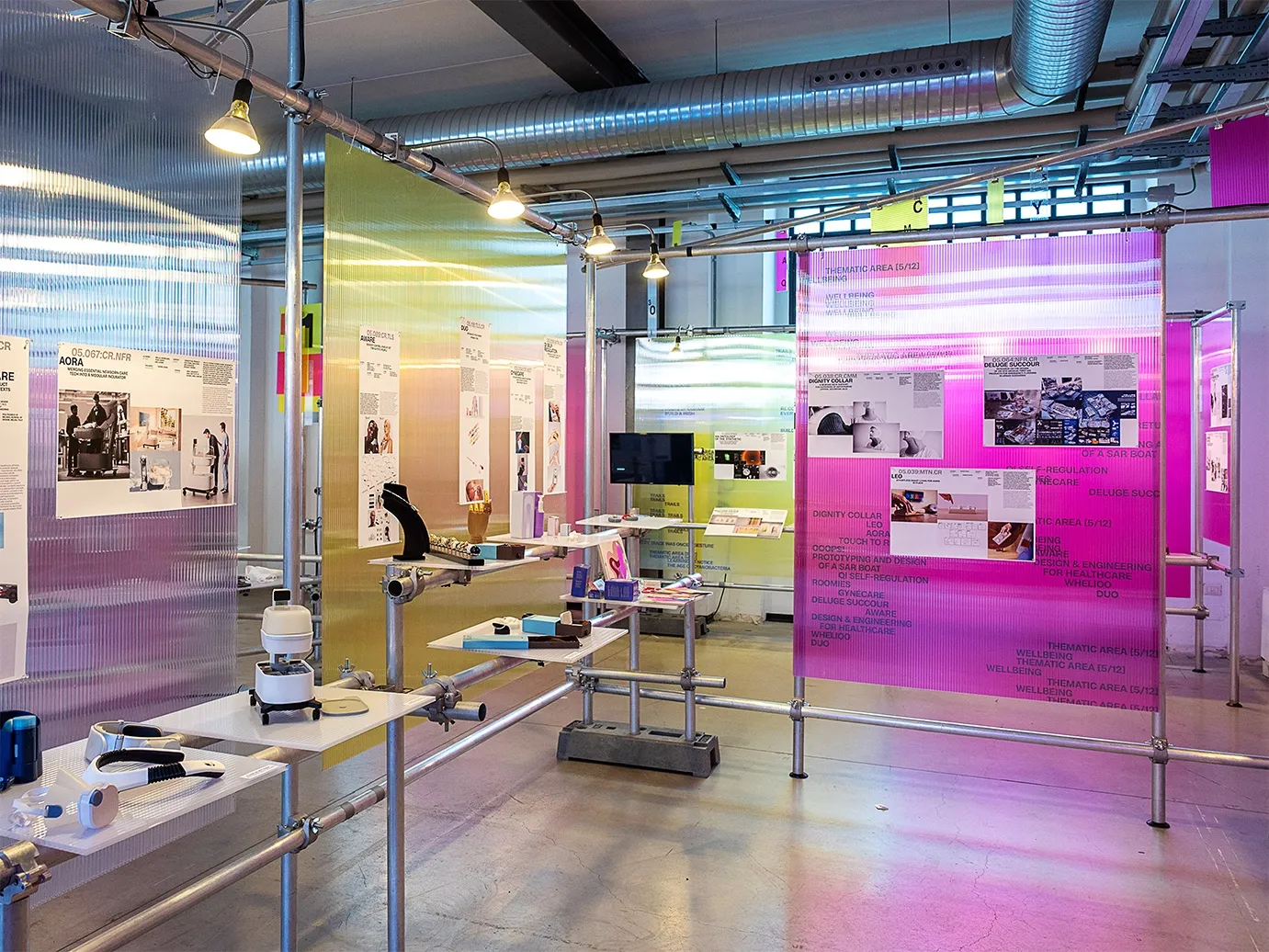
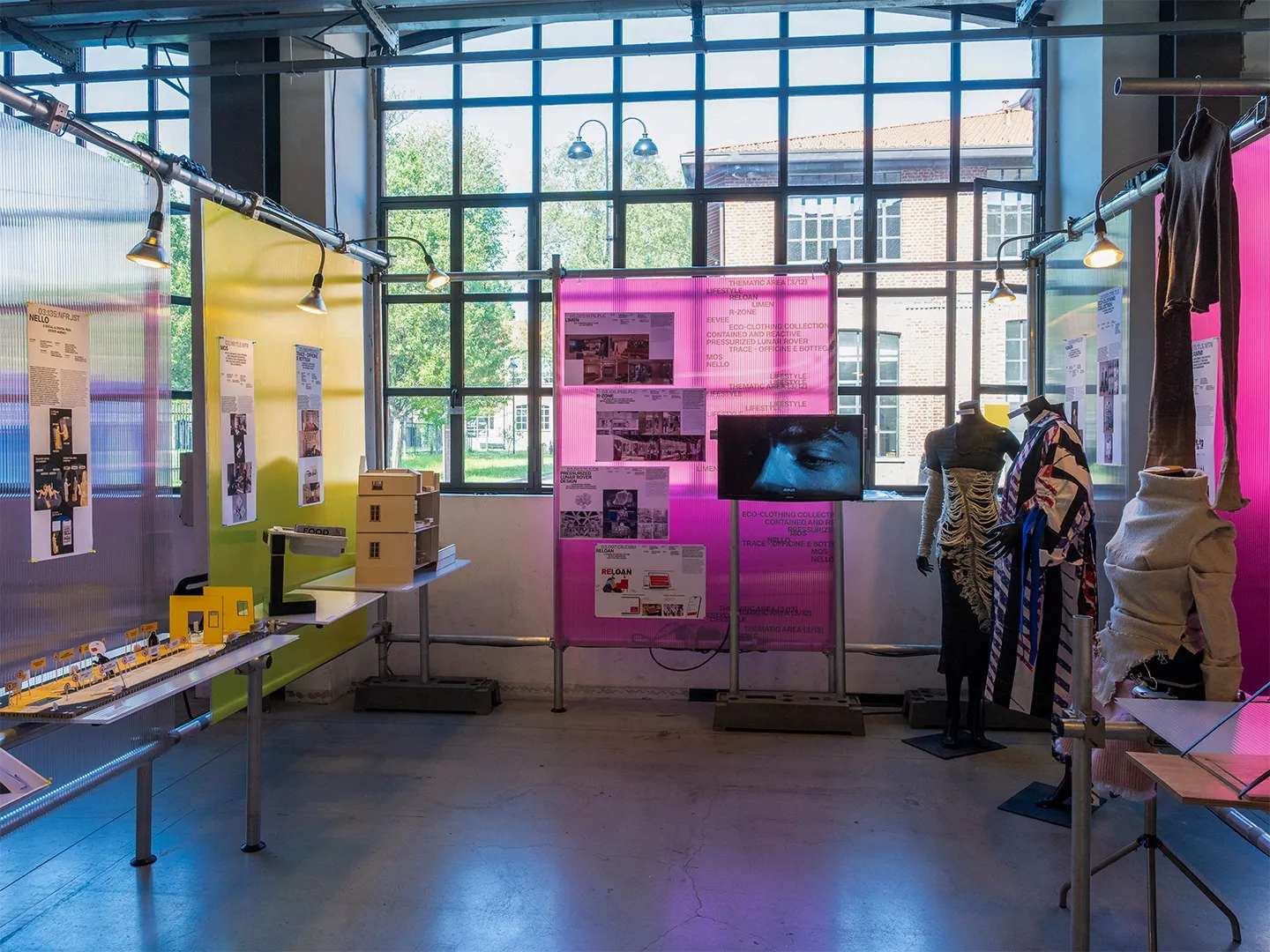
A visual identity for the 2026 edition of INTERDEPENDENCE: past, present, future, a series of initiatives presented by Politecnico di Milano and POLI.design during Milan Design Week. The exhibition reflects on how past legacies, present conditions and future possibilities continuously reshape one another: not separate layers, but interdependent forces that define the systems, narratives and environments we design within. The identity is conceived as an evolving archive, where traces from different temporalities accumulate, overlap and coexist. Through superimposition, transparency and fragmentation, past, present and future emerge simultaneously rather than in a linear order. Elements are partial and shifting, defined through their relation to others, and multiple layers stay visible at once, holding a tension between readability and density. The result is a flexible system that embraces instability while adapting across formats without losing conceptual clarity.
Project for Politecnico di Milano and POLI.design
Collaborators
Scroll down to see the project
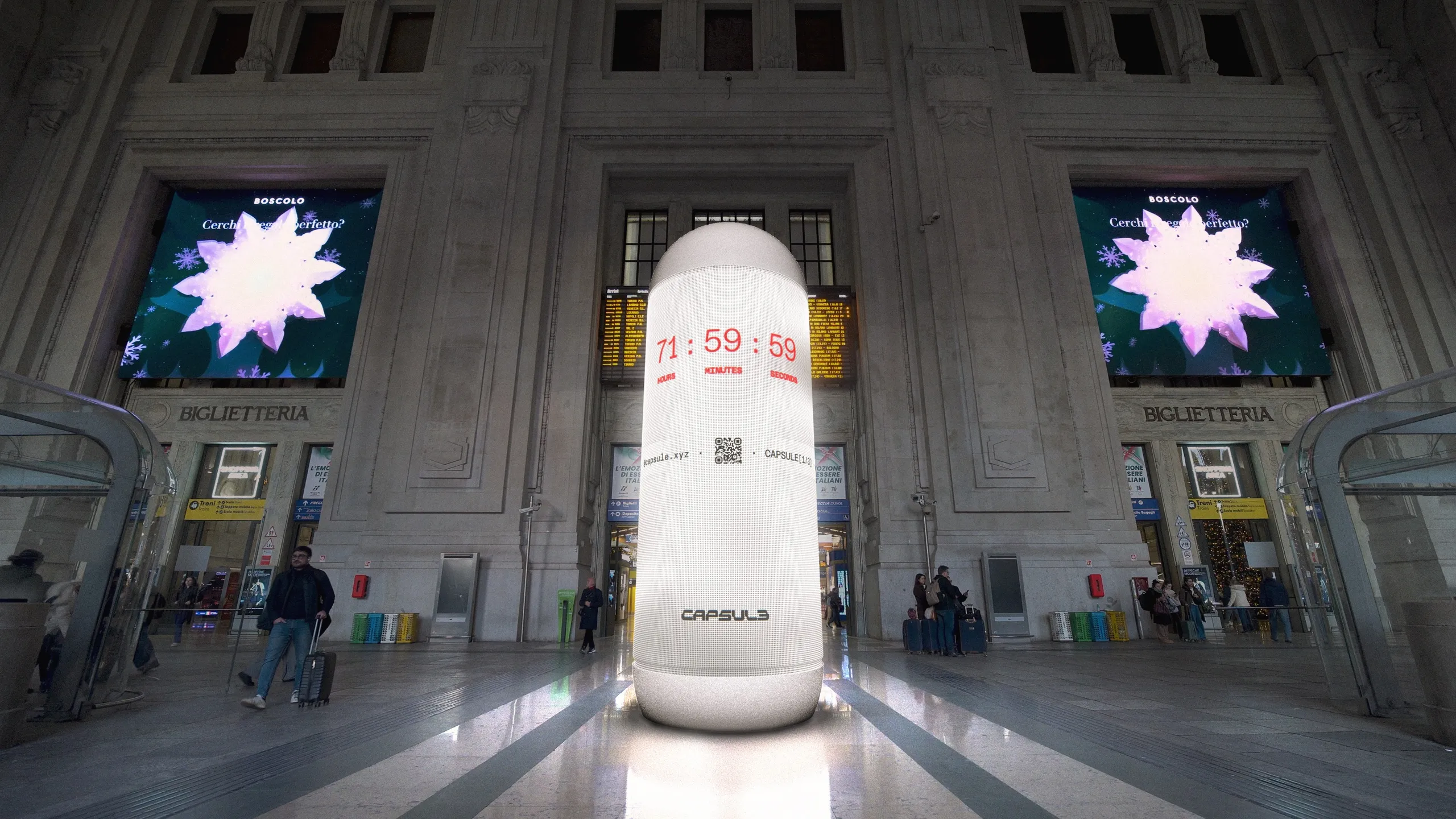
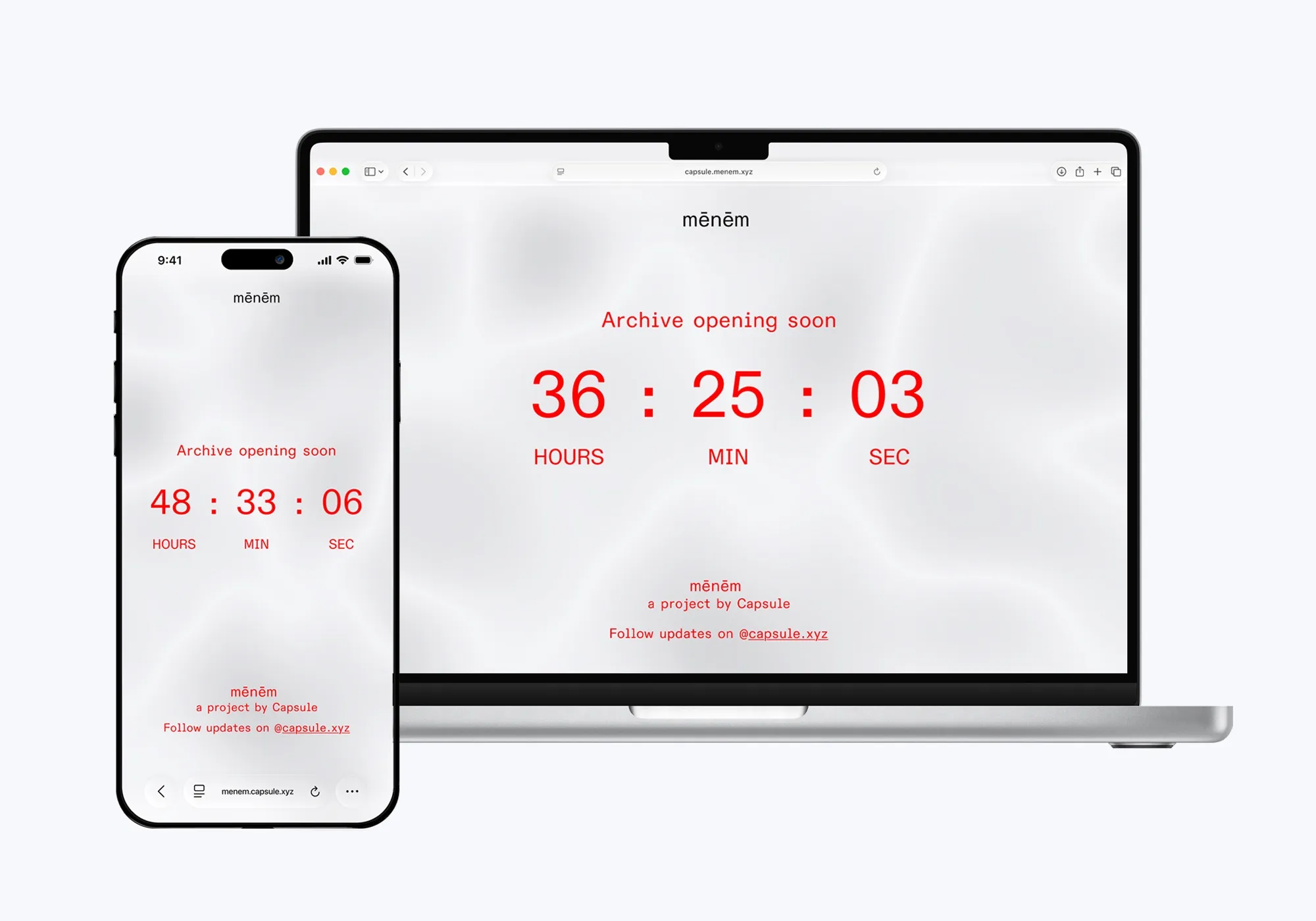
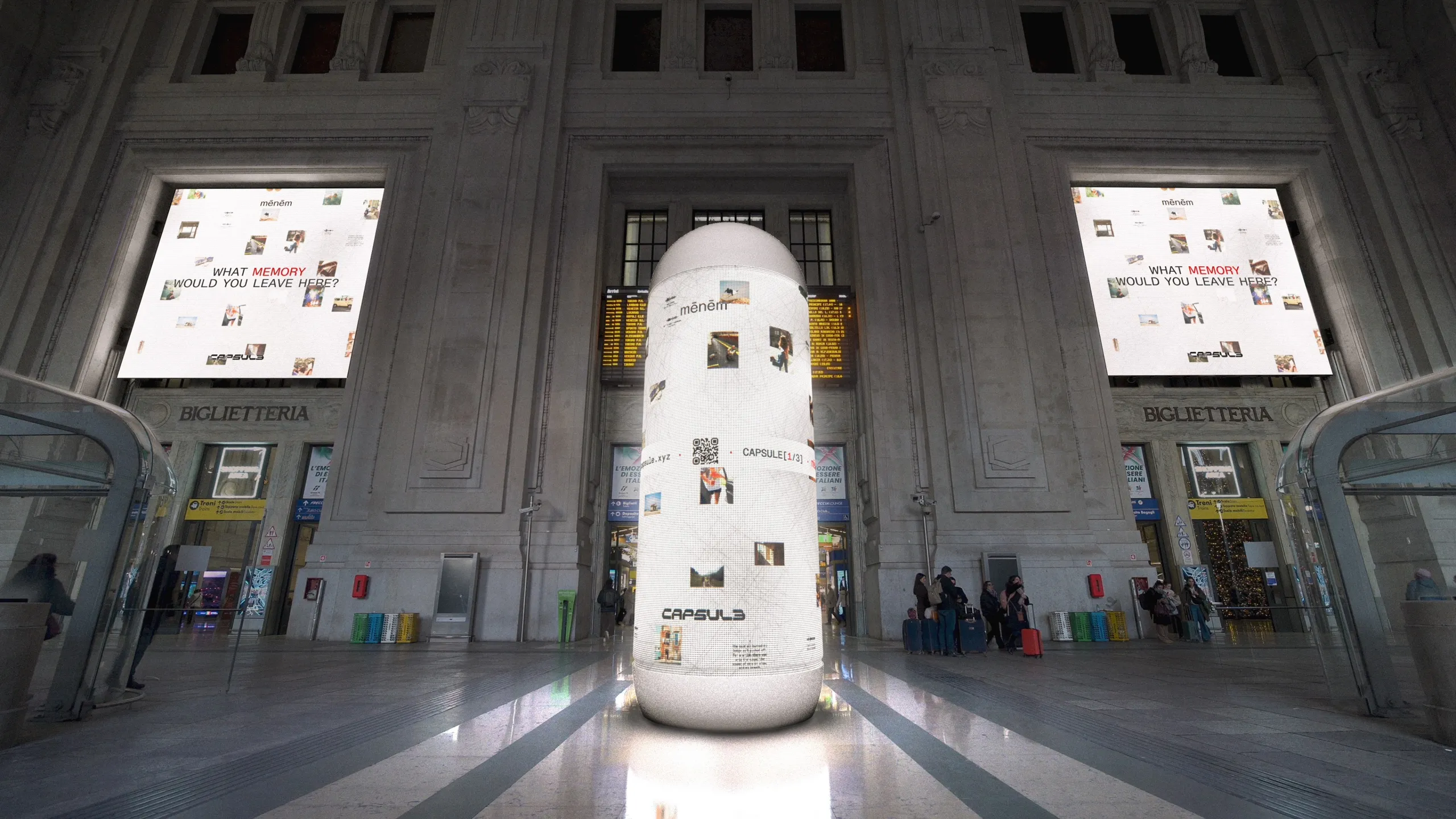
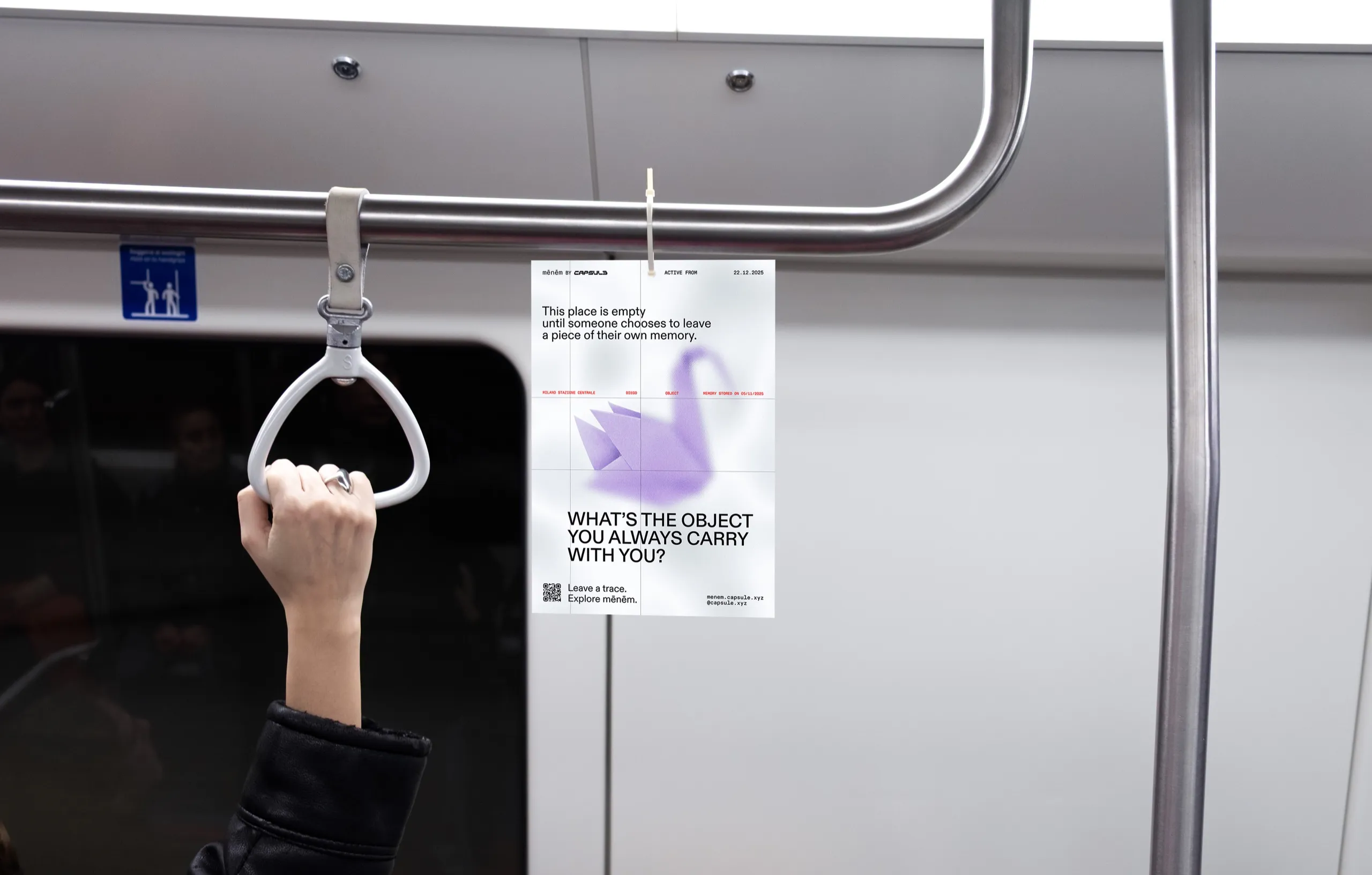
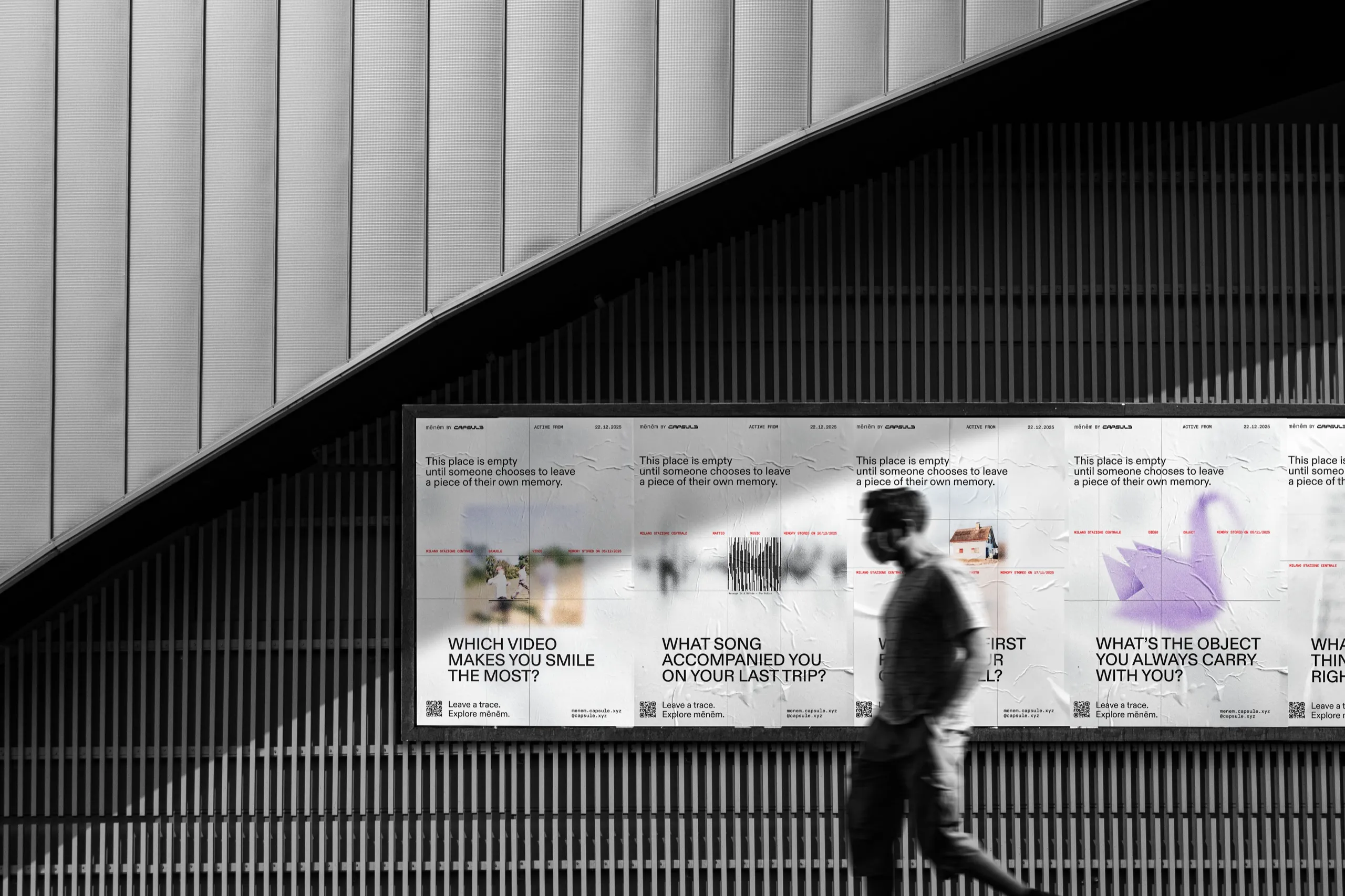
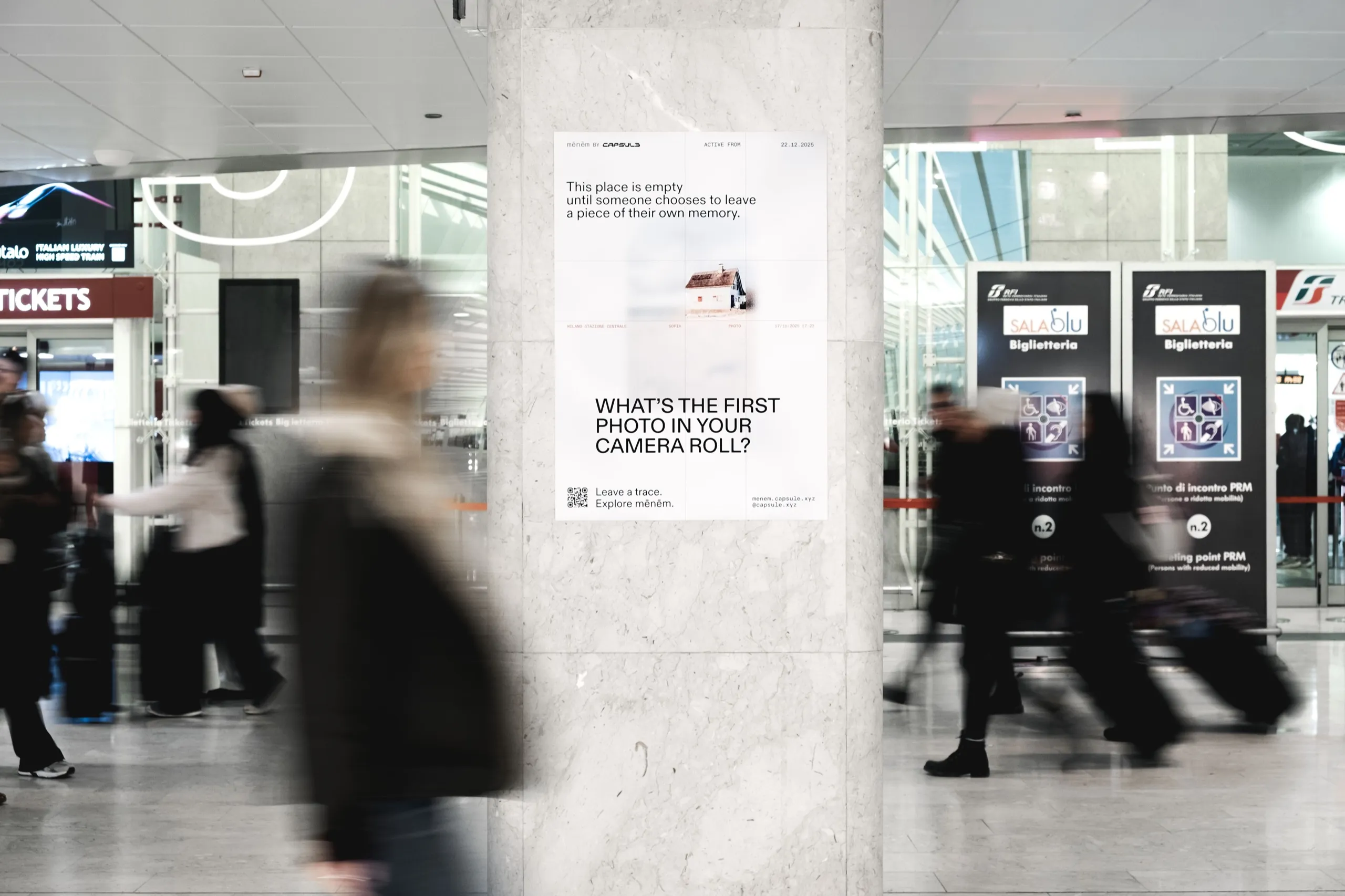
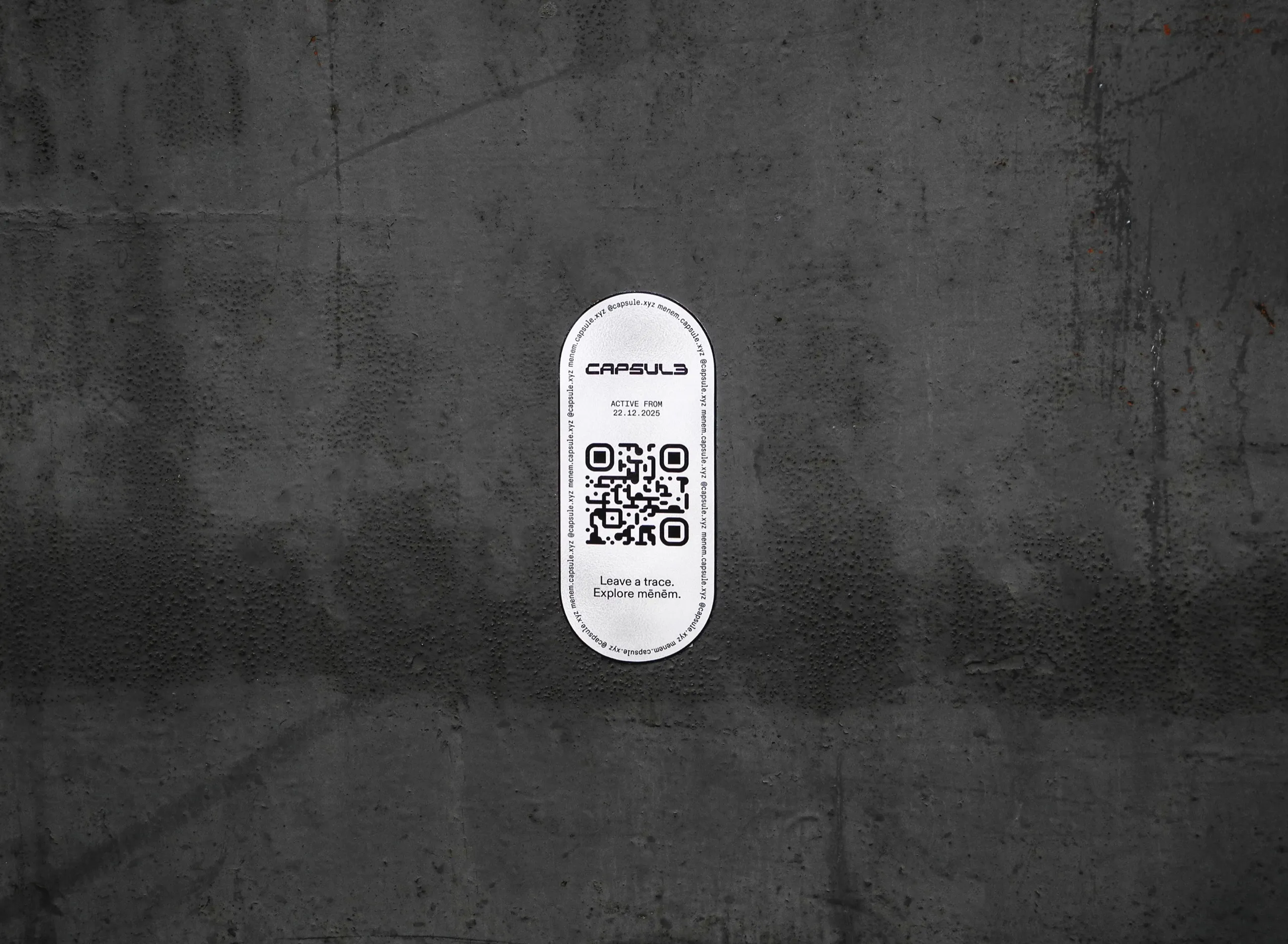
Mēnēm is a digital archive for spaces of transit, designed by Capsule, a multidisciplinary collective investigating the time and spaces of contemporary mobility. Grounded in listening-based research with Gen Z, the project addresses a mobility often perceived as utilitarian, anonymous and emotionally empty, and reinterprets what Marc Augé defines as non-places as spaces capable of hosting memory and human connection. Mēnēm takes shape as a heterotopic space in Foucault’s sense: it collects traces of lived experience (images, sounds, words, objects, videos) precisely where permanence is usually denied, and is accessible only there. Each person can stay within their intimate bubble or open up to a shared memory. The aim is not to make mobility faster or more efficient, but to give value back to its suspended time, turning transit into inhabited time and the non-place into a space rich with meaning.
University project
Collaborators
Monica Battaglia, Cosimo Gambarelli, Federico Porro, Anna Schnitzer, Serena Troisi
Partnerships
Scroll down to see the project
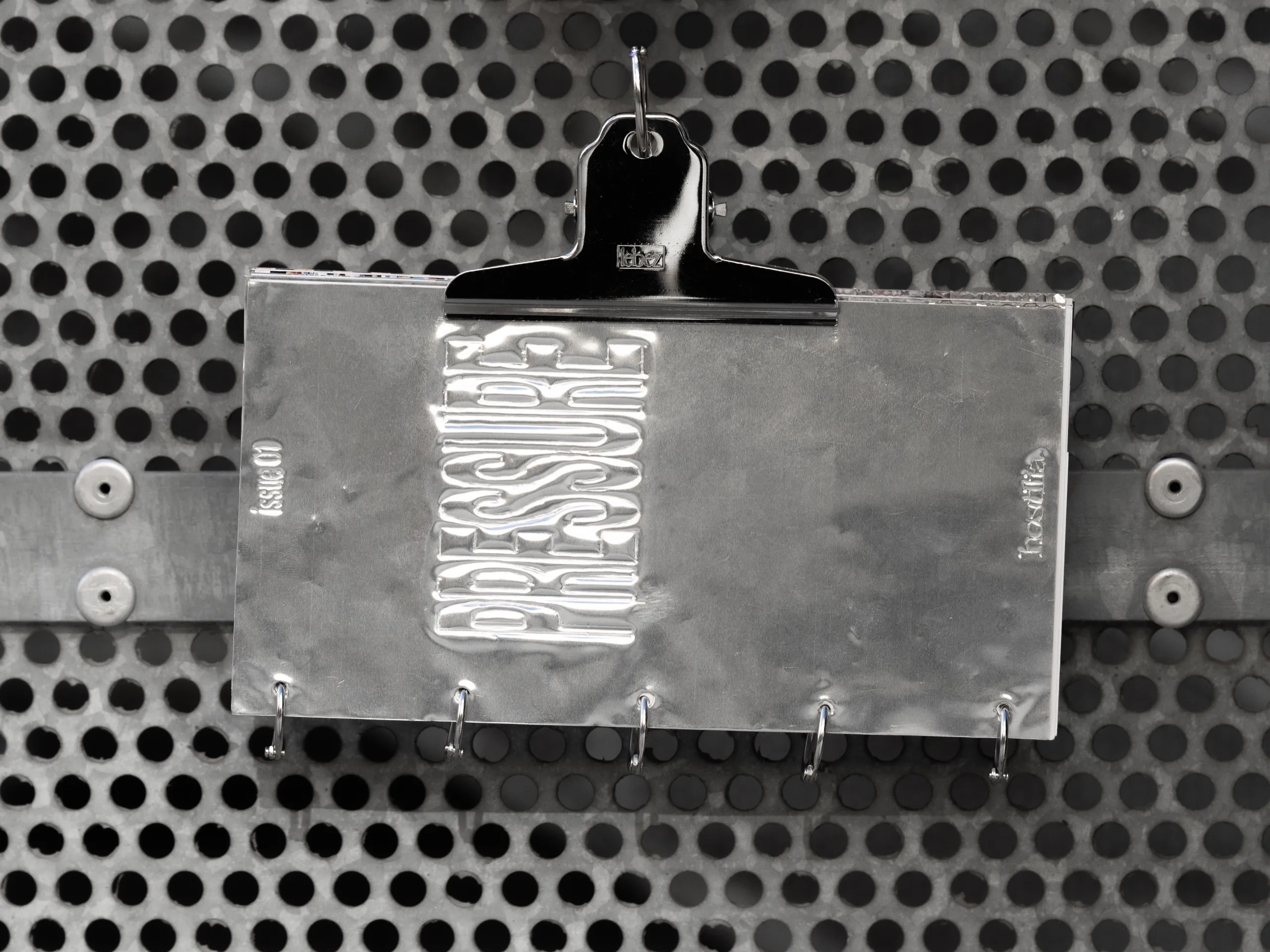
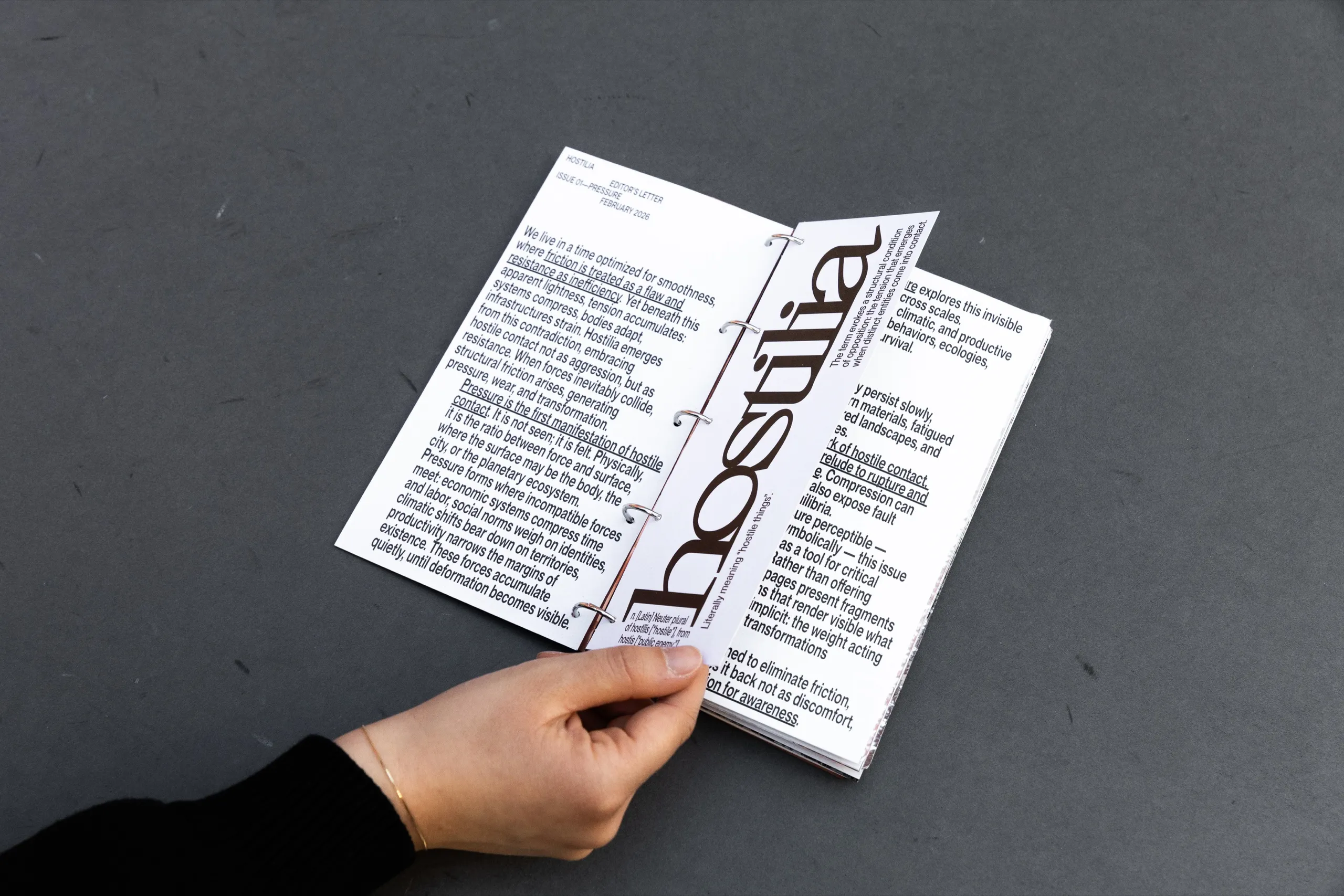
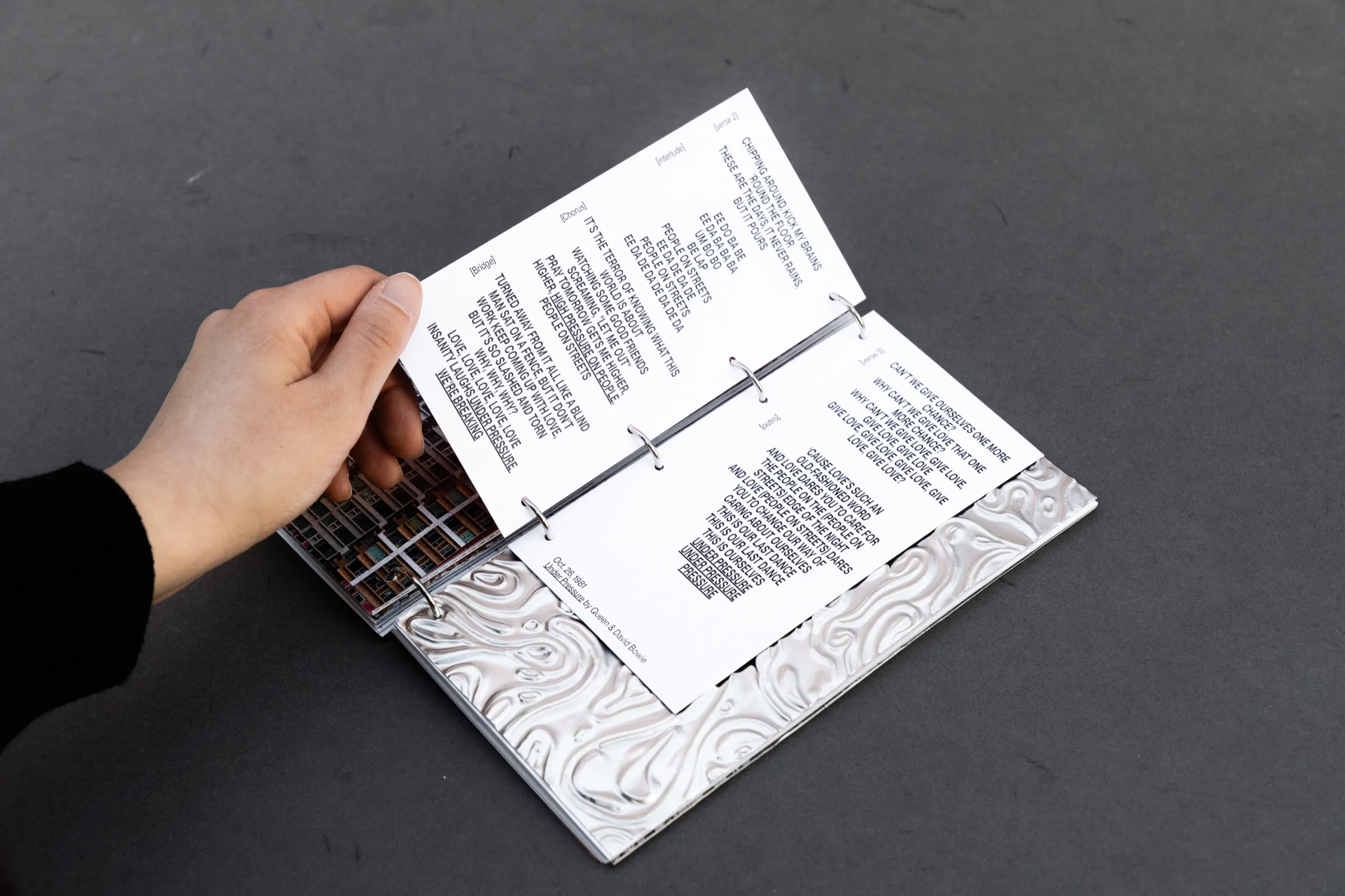
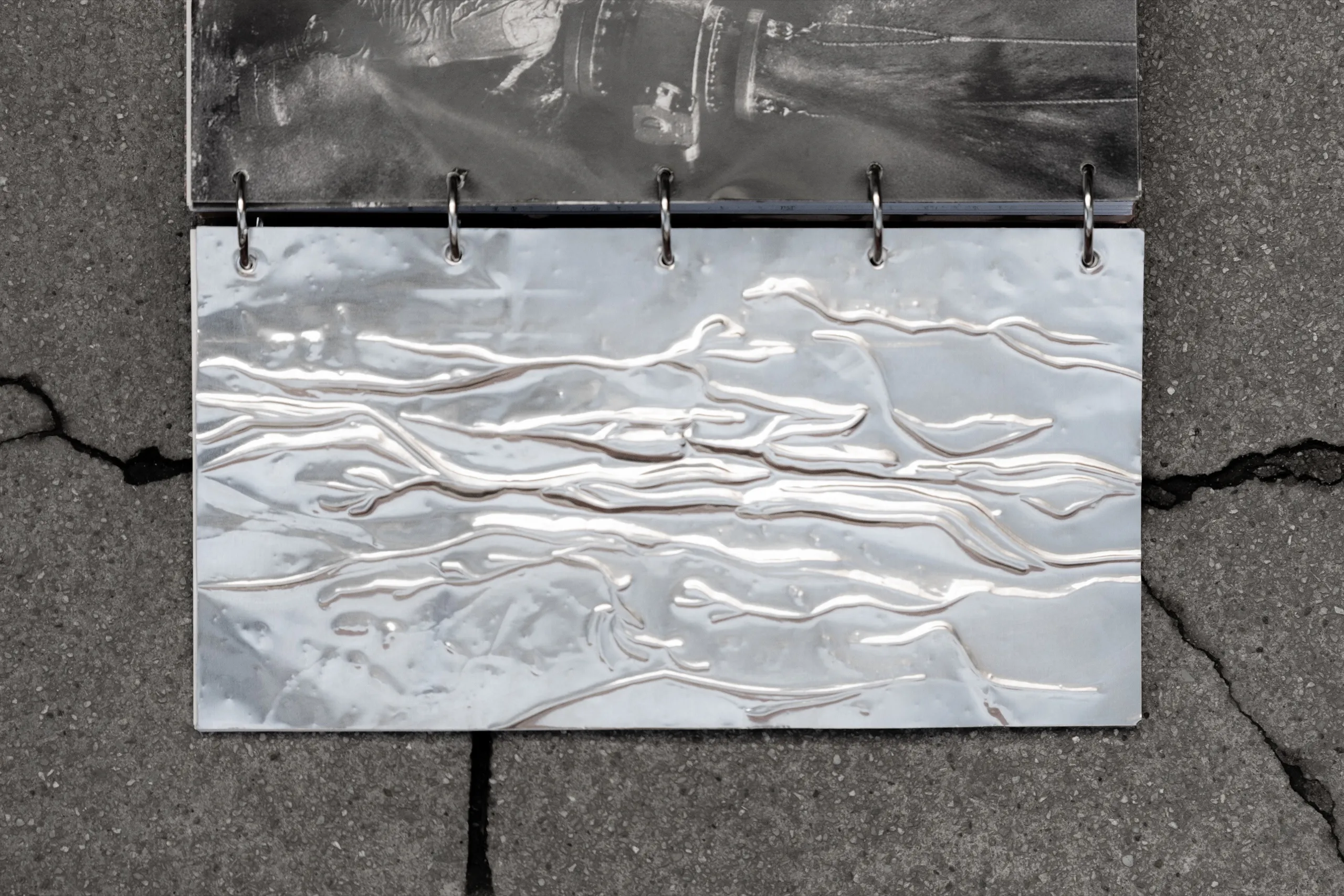
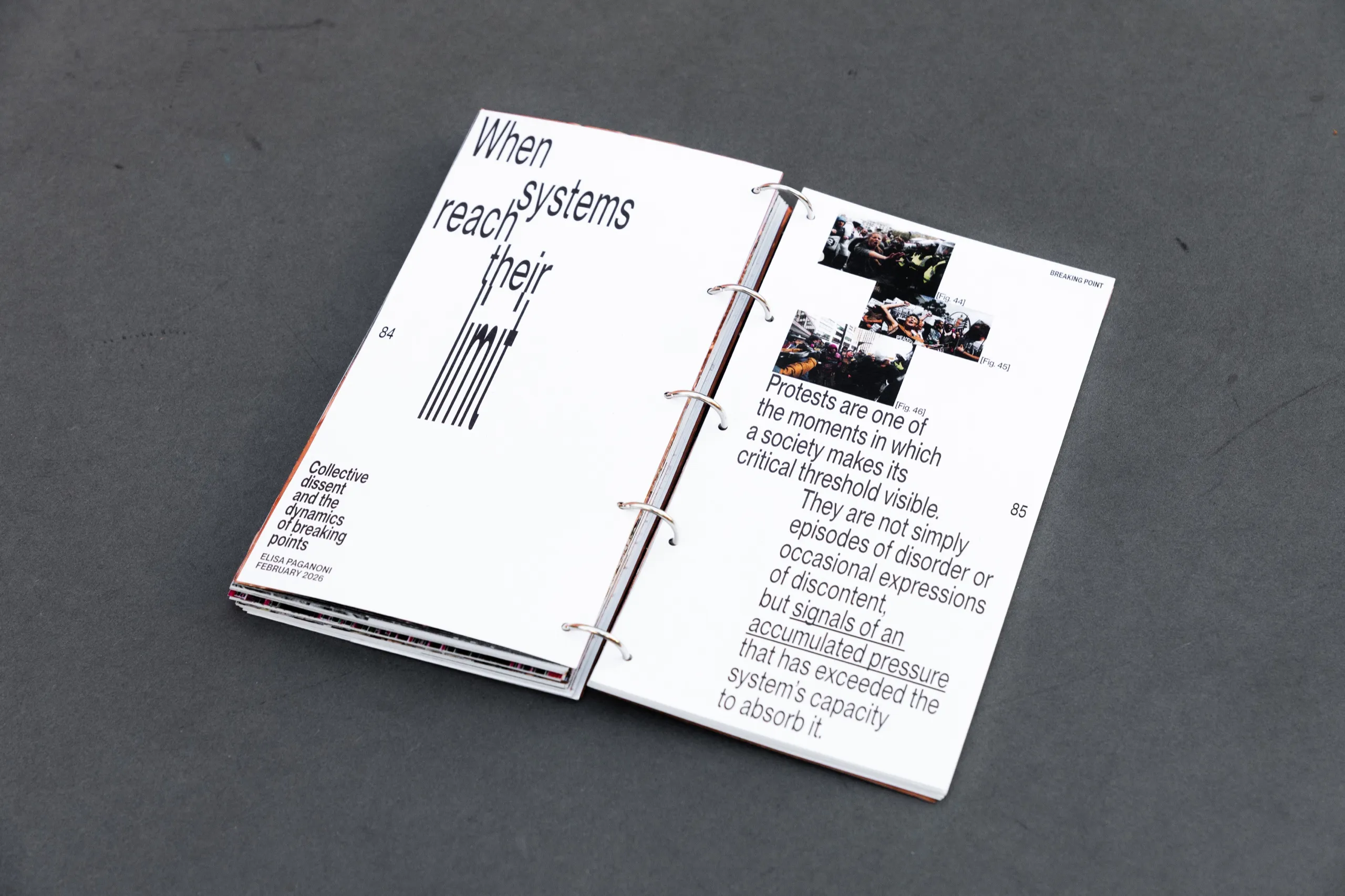
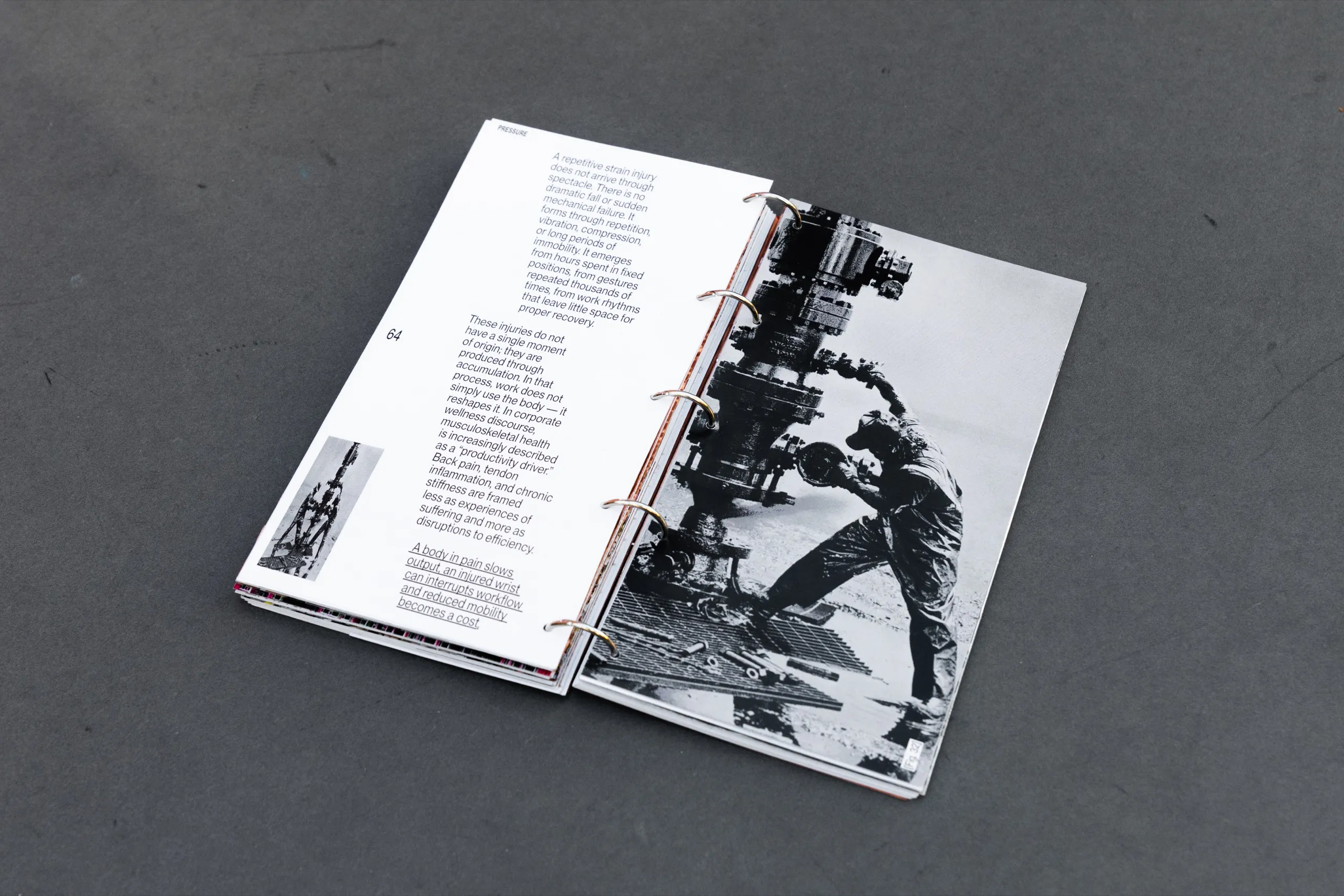
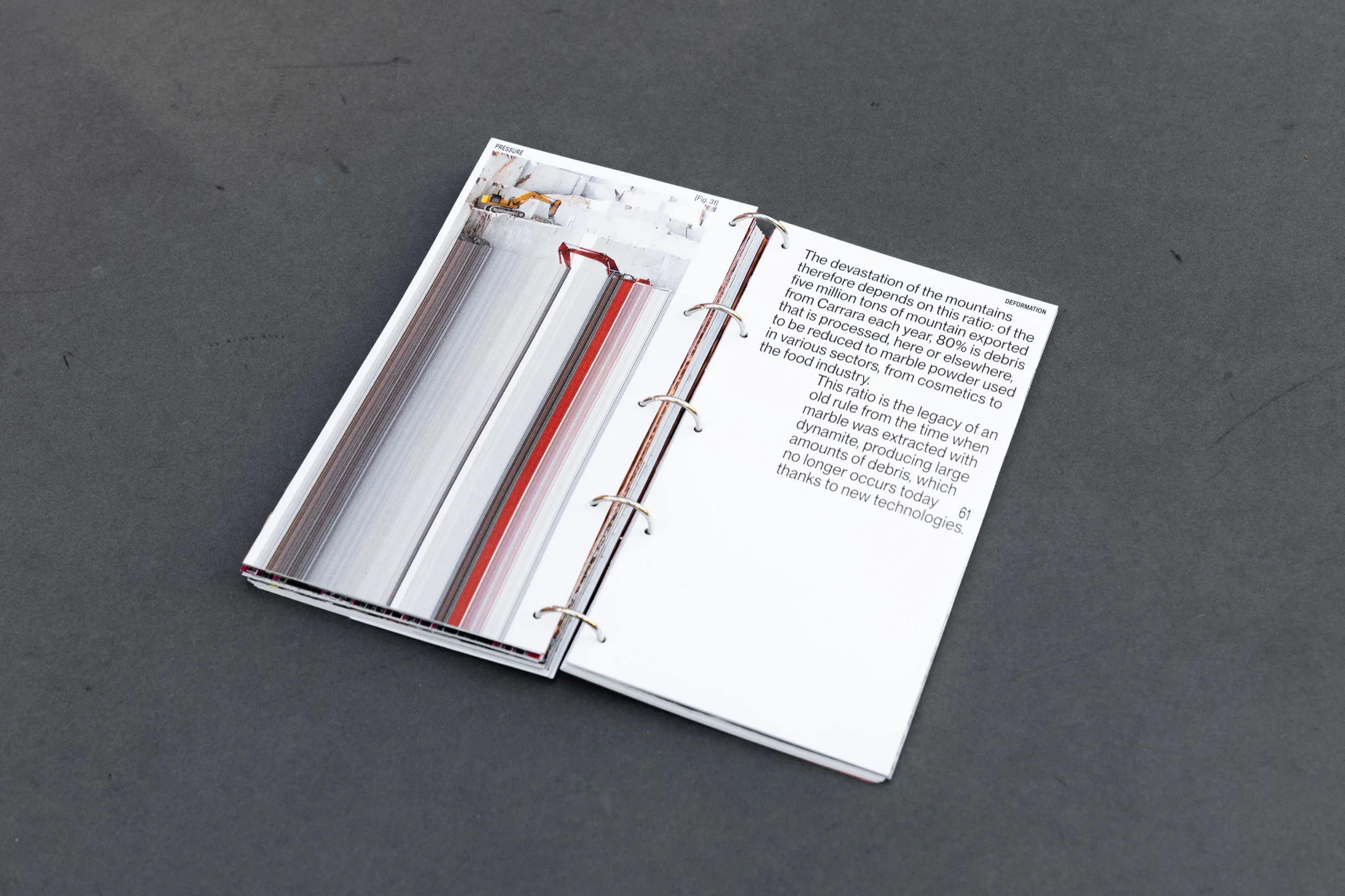
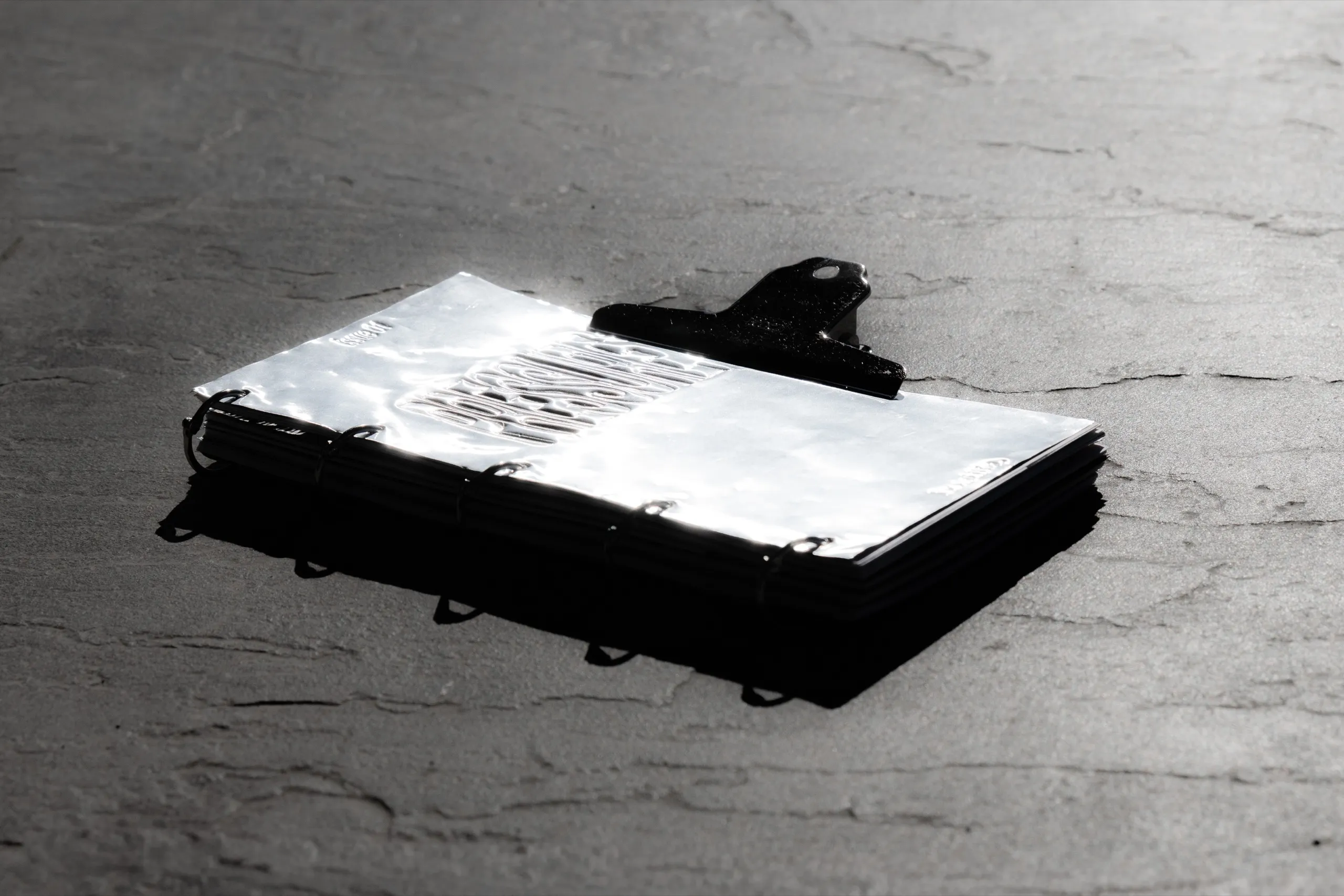
Hostilia is an independent magazine developed during a week-long workshop at Politecnico di Milano, led by Jeremy Leslie, founder of magCulture. It investigates friction as a defining condition of contemporary reality: in a landscape shaped by frictionless digital interactions, it reintroduces resistance as both editorial position and physical experience. At its core is hostile contact, the inevitable encounter between forces whose coexistence generates pressure, wear and transformation. The first issue follows this process across four chapters: Accumulation, Compression, Deformation, Breaking Point. Metallic surfaces, rigid inserts, exposed binding and varied paper stocks make it a resistant object, where weight and roughness become part of reading. Its stance is critical: it exposes the invisible mechanisms that regulate contemporary systems of power, framing conflict as a tension capable of revealing limits and triggering change.
University project
Collaborators
Yiming Bao, Monica Battaglia, Elisa Paganoni, Federico Porro, Anna Pustizzi
Tutors
Scroll down to see the project
Peak Prompt is an interactive one-page website that retraces and maps the ascent from Passo di Falzarego to Lagazuoi, developed during a three-day workshop at Lagazuoi EXPO Dolomiti, organised by Pittogramma and led by Giga. On a hike the gaze is always fixed ahead: the path is often a single one, and aiming for the summit we forget the step we are taking and what surrounds us. The project reverses this direction. Photographs, videos, sounds and a GPS track recorded with Wikiloc are placed along the route at the moment they were captured, while altitude, time and distance update as the visitor scrolls or lets the climb unfold on its own. Built entirely through AI with Cursor, the visualisation gives weight to every single shot and every single moment, turning the ascent from a race toward the peak into a sequence of present instants.
Workshop project
Organizers and tutors